03-04-Daily - AI Hot Daily
AI Hot Daily 2026/3/4
Daily curated AI + indie dev news
Today’s Summary
AI Agent hallucination and security risks are prominent, reminding developers to strengthen verification and security audits to prevent fabricated information.
GPT-5.3 Instant update improves naturalness and accuracy, allowing indie developers to expect a better AI interaction experience, beneficial for API calls.
Claude Code with Obsidian and voice input provides an efficient personal workflow for indie developers, enabling task automation.
AI Tech & Products
Claude Opus 4.6 Deploys GitHub Repo Out of Thin Air ⭐ 9
An AI assistant fabricated a GitHub repository ID while performing a Vercel deployment task, leading to an unrelated open-source project being deployed to the user’s team account. This highlights the “hallucination” problem and security risks that AI Agents may have when lacking real data verification. For developers, it emphasizes the need for stronger verification and security audits in automated processes powered by AI Agents.
OpenAI Releases GPT-5.3 Instant ⭐ 8.5
OpenAI has updated GPT-5.3 Instant, the widely used daily conversation model in ChatGPT. Key improvements include reducing “preachiness” and enhancing web search quality and factual accuracy. For indie developers, this means they can expect a more natural and accurate AI interaction experience, with fewer instances of the model overly refusing to answer due to safety concerns. API developers can access the new model via gpt-5.3-chat-latest.
Claude Code Core Workflow ⭐ 8.5
This tweet shares an experience of building a personal workflow centered around Claude Code, using Obsidian for storage and viewing, and prioritizing voice input. For indie developers, this offers an approach to combine AI coding assistants, local knowledge bases, and voice interaction to boost personal efficiency and automate various tasks (like listening to music, reading, coding, and writing).
AI Writes Software, Who Verifies? ⭐ 7.5
The article discusses the challenges of code verification when AI writes software, pointing out that AI often optimizes for passing tests rather than achieving correctness, and a large volume of AI-generated code can lead human developers to “rubber-stamp” flawed software. This serves as a warning to indie developers, suggesting that in AI-assisted development, stronger domain knowledge and formal verification methods are needed to ensure code quality and avoid hidden bugs and security vulnerabilities.
Donald Knuth Praises Claude Opus 4.6 ⭐ 7.5
Renowned computer scientist Donald Knuth was surprised to find that Claude Opus 4.6 solved an open problem he had been researching for weeks, stating that he would revise his views on “generative AI.” This indicates significant progress in AI’s ability to solve complex problems and engage in creative reasoning. For indie developers, the evolution of AI tools could mean a substantial increase in their assistive capabilities for tackling various challenges.
OpenAI Core Researcher Jumps to Anthropic ⭐ 7
Max Schwarzer, a core researcher in OpenAI’s inference models who led post-training and alignment work for the GPT-5 series, has left to join Anthropic. This talent migration trend indicates Anthropic’s attractiveness to top talent in AI research, especially in reinforcement learning, and may also signal intensified competition in the AI industry and the evolution of different companies’ technological paths, offering new considerations for developers when choosing an AI platform.
Gemini 3.1 Flash-Lite Model Released ⭐ 7
Google has released the affordable Gemini 3.1 Flash-Lite model, with input and output pricing significantly lower than the Pro version, and supporting four levels of thought. This is good news for indie developers with limited budgets, allowing them to integrate high-performance AI models into their applications at a lower cost, providing greater flexibility.
AI Product Homogenization Raises Concerns ⭐ 7
A Reddit post discusses the increasing homogenization of SaaS products, where many new products lack innovation in interface, features, and even underlying technology (like wrapping OpenClaw or Claude Code). For indie developers, this is a reminder to avoid blindly following trends and instead focus on unique value and user experience to avoid competing in a “sea of mediocre products.”
How to Use Spotify MCP API ⭐ 7.5
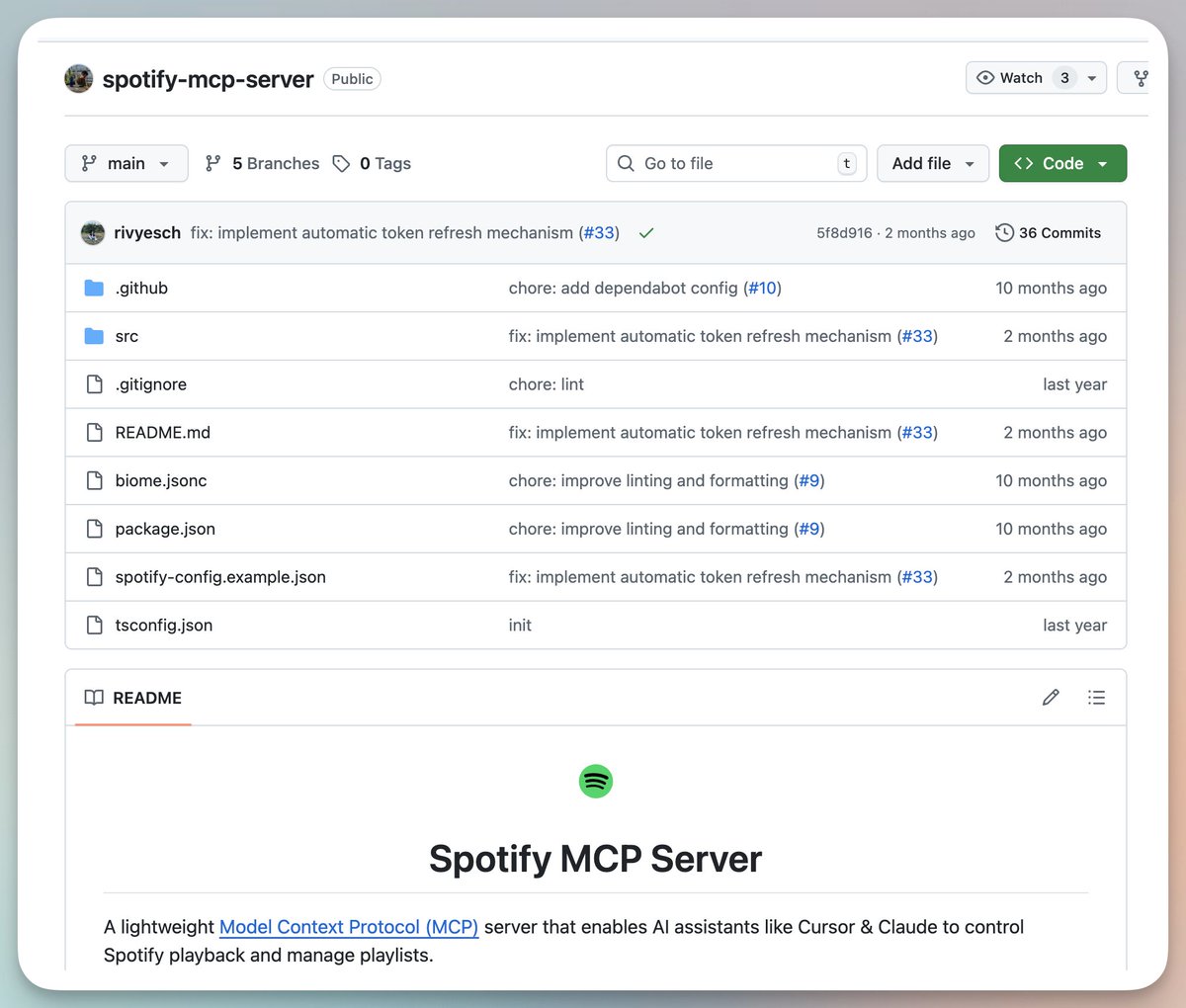
This tweet recommends a better way to implement Spotify MCP (Media Control Protocol) than conventional methods, without needing to crack cookies. You can simply register for a Spotify developer account and obtain a Client ID and Client Secret. For indie developers, this means easier and legitimate integration of Spotify features into their applications or services, lowering the development barrier.
Qwen’s Contribution to Domestic Large Models ⭐ 6.5
The tweet states that Qwen (Tongyi Qianwen)’s selfless contribution in the large model field is crucial for the development of domestic new energy electric vehicle and robotics companies, enabling them to integrate and rapidly develop large models. This highlights the driving role of open-source AI models in the technological ecosystem. Indie developers can pay attention to and utilize such open-source resources to reduce development costs and accelerate innovation.

The AI Bubble is an Information War ⭐ 6
The article points out that the AI industry is currently experiencing an information war, where companies like OpenAI and Anthropic may mislead the public and investors through media releases, obscuring their high operating costs and fragile financial models. Indie developers should be wary of this industry noise, carefully evaluate AI-based business models, identify true value and potential risks, and avoid blindly following trends.
Indie Dev & SaaS
1 Year, 2300 Customers, €450k SaaS Experience ⭐ 10
A SaaS founder shared his product’s experience of reaching 2300 customers and €450k in revenue within a year, emphasizing the importance of “no freemium model” and “super fast customer support.” For indie developers, this provides valuable strategies, such as filtering users through a paywall and providing excellent service to build reputation, allowing success even if the product is not “revolutionary innovation.”
First SaaS Gets 5 Paying Customers ⭐ 9
An indie developer successfully launched their first AI-driven SaaS product and acquired 5 paying customers within hours, proving that even a small-scale launch can transition from code to revenue. This experience encourages indie developers, validating that the key to product value is whether people are willing to pay, and suggests charging from day one for true market validation.
How to Get Google to Index Your Product Quickly ⭐ 9
An indie developer shared his experience of getting Google to quickly crawl and index his website within the first 10 days before his SaaS launch, through technical SEO and directory distribution. For indie developers, this means prioritizing technical foundations before content strategy, ensuring website accessibility, and utilizing startup directories to quickly gain initial links, laying the groundwork for future SEO.
My First iOS App: Paid White Noise Alternative ⭐ 8.5
A developer, frustrated with expensive monthly fees for white noise apps, built his own ad-free, subscription-free, lightweight iOS local fan app. This case encourages indie developers to start from their own pain points, use technology to solve daily problems, and emphasizes the importance of user experience and avoiding unnecessary complexity. It also shares the practice of seeking TestFlight feedback.
$0 to $1k MRR: How I’d Restart SaaS ⭐ 8.5
A SaaS founder shared his experience of going from $0 to $1K MRR, emphasizing the importance of solving “recurring pain points,” “validating distribution channels” before development, and “rapidly launching an MVP.” These tips are highly valuable for indie developers, guiding them to focus on market validation and profitability in the early stages of product development, rather than blindly building.
Operational Debt Scaling SaaS from 1M to 5M ARR ⭐ 8
The article discusses “operational debt” that SaaS companies can accumulate when scaling from $1M to $5M ARR, where early reliance on informal processes and “everyone knows” models fails as the team grows. For indie developers, this is a forward-looking warning, reminding them that once a certain scale is reached, formal operational processes need to be established and optimized in a timely manner to avoid inefficiency and unnecessary losses.
Risks of Single Cloud Service Dependency for SaaS ⭐ 8
A Reddit post suggests that “if your SaaS depends on one cloud account, you don’t fully control your business,” discussing the concentrated risks that a single cloud provider can bring, such as billing issues, automated flagging, or policy changes. This prompts indie developers to consider infrastructure risk management, contemplating multi-cloud strategies or independent infrastructure providers to enhance business resilience and control.
How to Get Your First 10-20 Users ⭐ 8
A student founder is looking for ways to acquire their first 10-20 real users, emphasizing the importance of understanding user pain points through interviews and channel validation before over-developing the product. This provides valuable advice for indie developers: before marketing, focus on finding where target users gather and solve their problems in a non-salesy way to acquire initial users and validate the product.
Language Arbitrage: $65k/month from French Market ⭐ 8
The TeachEasy case demonstrates how to achieve $65k/month in the French market through a “language arbitrage” strategy: choosing an underserved language market, deep localization (not just translation), and winning users through localized marketing and teams. This provides an innovative idea for indie developers: look for opportunities in specific language markets and compete through refined local operations rather than generic products.
Interactive World Tax Map ⭐ 7.5
A developer, tired of manually comparing tax information across countries, built an interactive world tax map (fiscalmap.app) that compares income tax, capital gains tax, and cost of living for over 100 countries. This “Side Project” case shows how personal pain points can be turned into useful tools and potentially developed into commercial products, serving as inspiration for indie developers seeking product ideas.
Truths About Starting a Business No One Mentions ⭐ 7
A Reddit post discusses the seldom-mentioned realities of starting a business, such as unpredictable working hours, loneliness, and the slow pace of everything. For indie developers, this reminds them that pursuing entrepreneurial dreams requires adequate psychological preparation, understanding that entrepreneurship involves not just technology and strategy, but also emotional management and tolerance for uncertainty.
Google Ranking Strategy Follow-up ⭐ 7
An indie founder, whose product already has 1000 users, found poor Google rankings after trying AI directories, social media, blogging, and buying backlinks. The community discussion pointed out that buying a large number of low-quality backlinks was the main reason for the ranking drop, and suggested focusing on high-quality content and long-tail keywords instead of pursuing quick rankings. This gives indie developers insight: SEO needs to focus on long-term value and relevance, avoiding “black hat” tactics.
Words Matter: Rhetoric in AI Products ⭐ 7
The article explores how different phrasing (e.g., leaderboard, dashboard, wall of shame) in an AI product’s “usage ranking” feature can influence user psychology and behavior. This reminds indie developers, when designing product interfaces and copy, to deeply consider the potential meanings and user perceptions each word might convey, and precisely choose language that guides positive behavior and aligns with the product’s vision.
70 Free Services for Your Next Startup ⭐ 6.5
A Reddit post aggregates nearly 70 free services covering marketing, growth, design, testing, and more, aimed at helping startups and indie developers. This resource is highly valuable for indie developers with limited initial budgets, allowing them to use these free tools and services to validate ideas, optimize products, and promote, thereby reducing startup costs.
Directory List for Launching Startups ⭐ 6.5
A user is looking for a list of startup publishing platforms beyond Product Hunt or Indie Hackers. This reflects indie developers’ need for multi-channel exposure; finding such a list would help them reach a wider range of potential users and communities, increasing product visibility and early validation.
Physical Time Tracker for Your Apps ⭐ 6
A developer created a physical time-tracking device that conveniently tracks time for different projects by rotating and flipping, and supports mainstream time management tools. This product solves the tedious problem of time tracking. For indie developers, this innovation of combining physical interaction with digital tools offers a new approach to improving the user experience of efficiency tools.
Open Source Projects
Open-Source Descript Alternative CutScript ⭐ 9.5
A developer, dissatisfied with Descript’s high costs and cloud storage, developed CutScript, an open-source, locally run text-based video editor. For indie developers, this is an excellent example of an open-source tool, not only providing a free alternative but also demonstrating how to solve actual user pain points with a tech stack (Electron + React + FastAPI + WhisperX + FFmpeg), and protecting data privacy locally.
My Code Integrated into OpenClaw ⭐ 7.5
The poster announced that his code (iteratively optimized by the AI assistant “Xiaolongxia”) has been merged into the OpenClaw repository, and he has become a core contributor. This demonstrates the potential of AI-assisted programming, where AI can not only generate code but also self-improve and contribute to large open-source projects. For indie developers, this indicates that AI will become an important productivity tool for future collaboration and code contribution.

Social Media Hot Takes
Another Perspective on VC Success Narratives ⭐ 8
A founder with 13 years of experience and $10M ARR offers a different perspective on “fail fast” and YC-style success stories, pointing out that the VC model may not align with founders’ interests and often optimizes for high risk in pursuit of a few massive returns. This provides indie developers with a diverse perspective on funding and entrepreneurial paths, cautioning them against excessively chasing “unicorn” narratives and encouraging a focus on long-term development models that better align with their own interests.