03-10-Daily - AI Hot Daily
AI Hot Daily 2026/3/10
Daily curated AI + indie dev news
Today’s Summary
AI Agents are undergoing a qualitative change, evolving from chatbots to autonomous intelligent agents.
Future software development will focus on "Agent-friendly" design, requiring indie developers to rethink new product designs and business models.
AI has made breakthroughs in complex logical reasoning, and developers can explore its potential to solve specialized problems.
AI Tech & Products
AI Agents: The Future Users of Software ⭐ 9
The article points out that AI Agents are undergoing a qualitative change, evolving from simple chatbots to intelligent agents with autonomous computing environments and long-term memory. In the future, they will become the primary users of software, and indie developers need to focus on the concept of “building for Agents.” This means software development needs to shift from “human-friendly” to “Agent-friendly,” with an API-first approach as the baseline, supporting autonomous Agent access and payment, and avoiding traditional human interaction barriers. This provides new product design and business model thinking directions for indie developers.

OpenClaw Security Defense Practical Guide ⭐ 8.5
The article details how OpenClaw built a six-layer prompt injection defense system based on layered and graded principles, providing specific implementation details and code volume. Indie developers can learn from this how to design and implement robust AI security defense mechanisms, especially when building autonomous AI Agent products. Layer 1 text purification and Layer 5 runtime governance mechanisms (such as spending limits and call volume limits) can effectively control costs and prevent abuse, offering significant engineering reference value.

Claude Opus Solves Computer Science Problem ⭐ 8.5
Renowned computer scientist Donald Knuth was amazed that Anthropic’s Claude Opus 4.6 solved an open problem he had been researching for weeks. This indicates that AI has made significant breakthroughs in complex logical reasoning and creative problem-solving. Indie developers can pay attention to the potential of such models in product innovation and automated research, exploring their application in solving specialized problems in specific fields.
AI Agents Asynchronous Collaboration Research Concept ⭐ 8
Andrej Karpathy proposed that future AI automated research should evolve into “asynchronous large-scale collaborative Agents,” similar to the SETI@home project model. This concept provides indie developers with ideas for building AI collaboration platforms or using distributed Agents to solve complex problems, enabling broader, multi-directional exploration by mimicking research communities rather than individual researchers.
Vibe Coding: AI-Assisted Development Practice ⭐ 7.5
During sick leave, the author successfully implemented a long-unresolved sponsor panel feature through “vibe coding” – using an AI Agent team to assist in generating obscure code. This practice shows that by providing sufficient context (i.e., “Agent skills”), AI can play a huge role in tasks that are not proficient or highly repetitive. Indie developers can learn this model to improve development efficiency, especially when dealing with specific tech stacks or problems where good abstractions are lacking in existing libraries.
Microsoft AI Strategy and CopilotCowork Controversy ⭐ 7
The article quotes doubts about Microsoft’s AI strategy, suggesting that since investing in OpenAI, Microsoft itself has performed mediocrely in AI product innovation. For example, its Copilot Cowork is questioned whether it can stand out among numerous AI products. For indie developers, this means that even giants may face product homogenization and user acceptance challenges in the highly competitive AI market, prompting indie developers to focus on unique value and solving specific user pain points.

JSLinux Supports x86_64 ⭐ 6
JSLinux now supports the x86_64 architecture. Comments suggest combining it with AI coding Agents to run virtual operating systems in the browser. This provides indie developers with a new sandbox environment idea. By running Agents in a browser-built Linux environment, secure and controllable code execution and testing can be achieved, and it also brings new integration possibilities for AI-assisted development tools.
AI Programming Courses Proliferate, Commercial Value Questionable ⭐ 6.5
The blogger complains that AI programming courses are rampant, but many instructors themselves lack experience with successful commercial products, leading to a phenomenon where “those who make AI products don’t make money, but those who make AI courses do.” Indie developers should be wary of such phenomena when choosing learning resources, focusing more on insights from those with real commercial experience, and avoiding being misled by vague theories or courses lacking practical application.

Indie Dev & SaaS
Thresholds and Challenges for Personal Overseas USD Income ⭐ 8
A developer shared several income thresholds for earning USD overseas as an individual: from earning $1,000/month to prove product viability, to stable daily income of $100 to prove traffic stability, then to $10,000/month requiring increased traffic, and finally to $100,000/month requiring a small team and deep cultivation. For indie developers, understanding these phased goals and challenges helps better plan product development paths and team building, avoiding bottlenecks encountered at different stages.
“Ge Fei’s Friends” New Word New Site Competition: Traffic and Monetization ⭐ 7.5
The results of the “Ge Fei’s Friends” community’s new word new site competition show that the champion website achieved 510K PV in its first month. The article suggests that indie developers can start with small game sites during their practice phase, and then move to AI tool sites after gaining experience, because AI tool sites have stronger monetization capabilities with the same traffic. This provides indie developers with product selection strategies for traffic acquisition and commercial monetization, emphasizing the importance of starting small and accumulating experience.

“The Noble Path”: Building Pure Value ⭐ 7
The article calls for breaking the entrepreneurial mindset of “everything must be commercialized,” advocating a “gift-giving” approach, which means solving niche problems for specific communities and sharing them for free. For indie developers, this is a profound reflection on “the meaning of building,” encouraging developers not only to pursue commercial success but also to value creating pure value and joy, avoiding being hijacked by market logic, and thus returning to the satisfaction brought by creation itself.

Invested API Platform Gains Promotion from Influencer ⭐ 6.5
An API platform invested in by a blogger gained attention and a small boost due to “organic” promotion from a famous influencer. For indie developers, this reveals the immense power of influencer effect and word-of-mouth in product promotion, indicating that even small initial projects can quickly expand their influence and attract users if they gain recognition from influential individuals.

Open Source Projects
Fontcrafter: Handwriting to Font ⭐ 6
Fontcrafter is a tool that converts handwriting into real fonts, and it runs entirely in the browser. For indie developers, the emergence of such tools provides new creative and product directions, especially in personalized customization and design, with broad application prospects. The in-browser operation lowers the user threshold and enhances the user experience.
Industry Dynamics
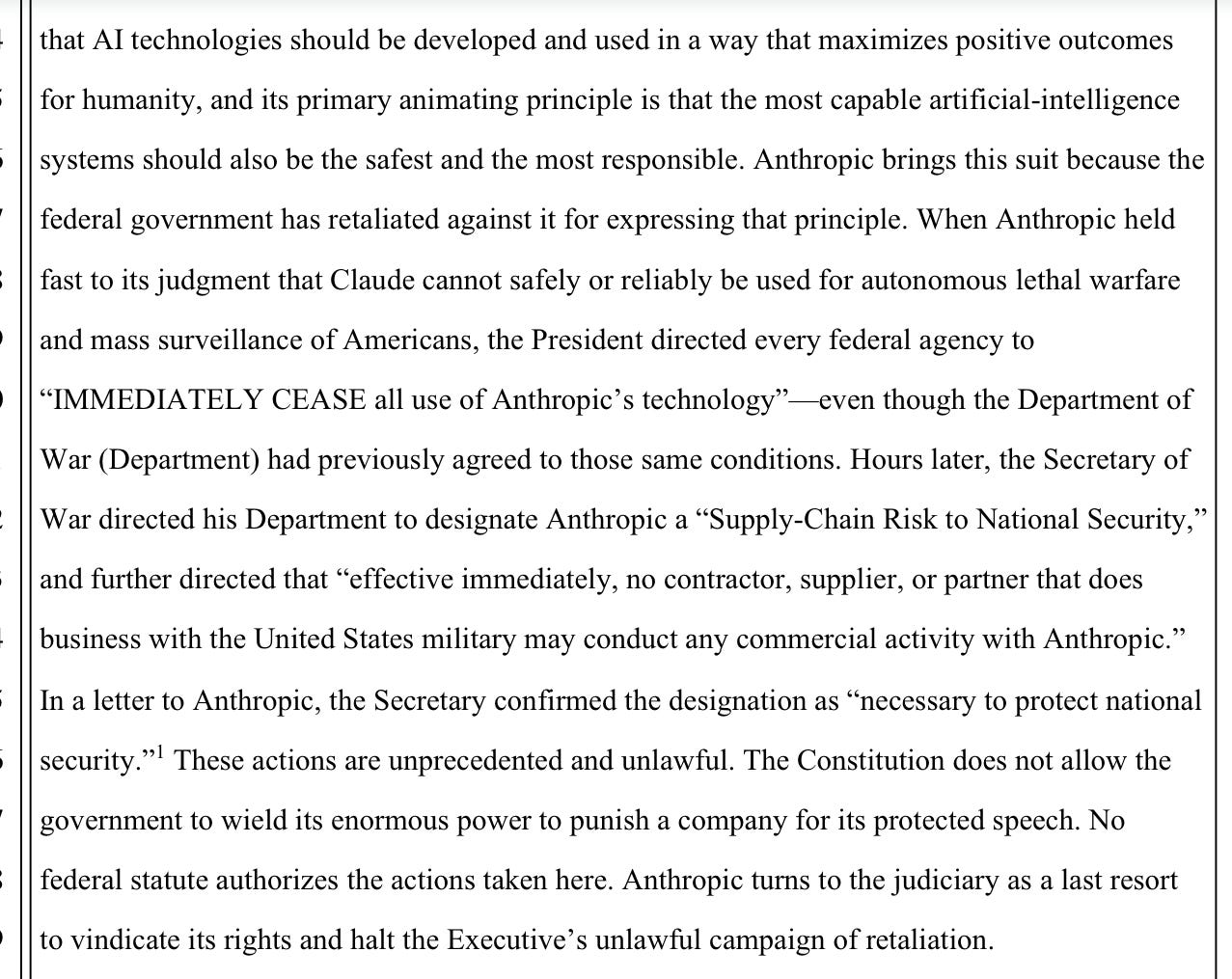
Anthropic Sues US Government ⭐ 6
Anthropic is suing the US government for undisclosed reasons, but the article expresses support. This reflects potential legal and regulatory conflicts between tech companies and government agencies during AI development. Indie developers should pay attention to such cases to understand the policy risks and legal frameworks facing the AI industry and prepare for the compliance of their own products.
Social Media Hot Topics
Humans and Agents: The Attribution of Freedom and Responsibility ⭐ 8
The article points out that, compared to AI Agents, humans possess two irreplaceable qualities: being the master of money and the bearer of legal responsibility. This has sparked community discussion on human core values and legal ethics in the AI era. For indie developers, when designing AI products, it is necessary to deeply consider the boundaries of AI’s role, the allocation of user responsibility, and potential legal risks to ensure the product’s social responsibility.
AI Reshapes Copyright, Intellectual Property Faces Impact ⭐ 7
The article discusses the impact of AI’s ability to reconstruct code on copyright and intellectual property, especially if AI can generate source code from specifications, then the focus of intellectual property will shift from code to the specifications themselves. Community discussions express concern that large tech companies might use AI to strengthen their control over intellectual property. For indie developers, this means needing to pay attention to the evolution of copyright laws and considering how to protect their creations in the context of AI-assisted development.
Meta AI Glasses Privacy Leak Risk ⭐ 6.5
The Meta AI smart glasses project has been exposed for privacy issues, with Kenyan contractors able to view sensitive video content recorded by users without their knowledge. This reminds indie developers that when designing and developing products involving user privacy and data collection, user privacy protection must be prioritized, and strict data processing procedures and security protection mechanisms must be established to avoid user trust crises and legal risks due to privacy leaks.