03-12-Daily - AI Hot Daily
AI Hot Daily 2026/3/12
Daily curated AI + indie dev news
Today’s Summary
Harness engineering enables scalable AI Agents, improving complex task processing. Indie developers can use it to build stable, efficient AI solutions for autonomous software development.
Google Gemini Embedding 2 is a native multimodal embedding model that simplifies cross-modal data processing. Developers can reduce integration costs and enhance RAG and other application capabilities.
The Copilot CLI beginner tutorial boosts coding efficiency and reduces debugging costs. Mastering its agent and skill features accelerates project development and code reviews.
AI Tech & Products
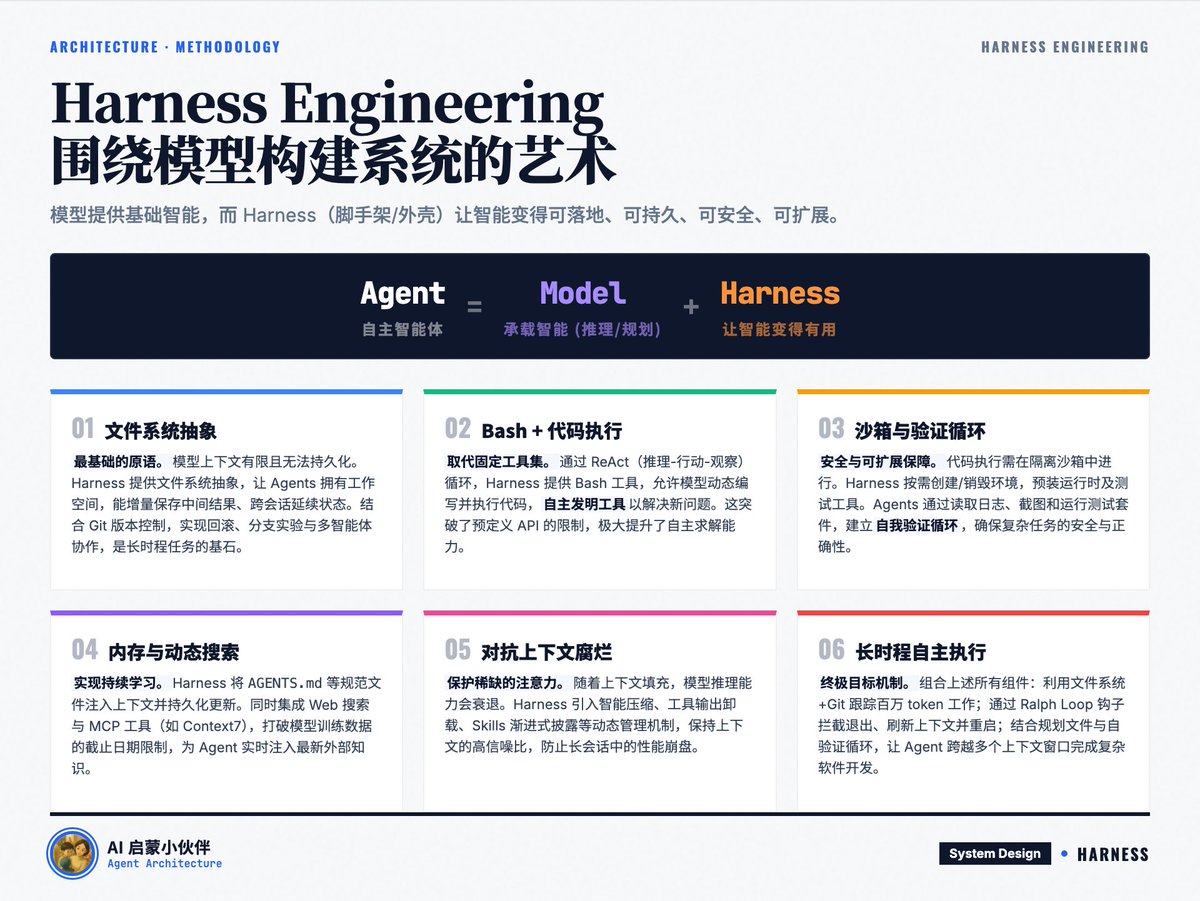
Agent = Model + Harness ⭐ 9.5
The core of an AI Agent lies in its Model (carrying intelligence) and Harness (making intelligence practical and scalable). Harness engineering includes file systems, code execution, sandboxing, memory and search, context management, long-term autonomous execution, and more. These components work together to enhance an AI Agent’s ability to handle complex tasks. For indie developers, understanding Harness Engineering can help build more stable, efficient, and scalable AI solutions, breaking through the limitations of single models to achieve complex goals like “autonomous software development.”
Google Releases Gemini Embedding 2 ⭐ 9
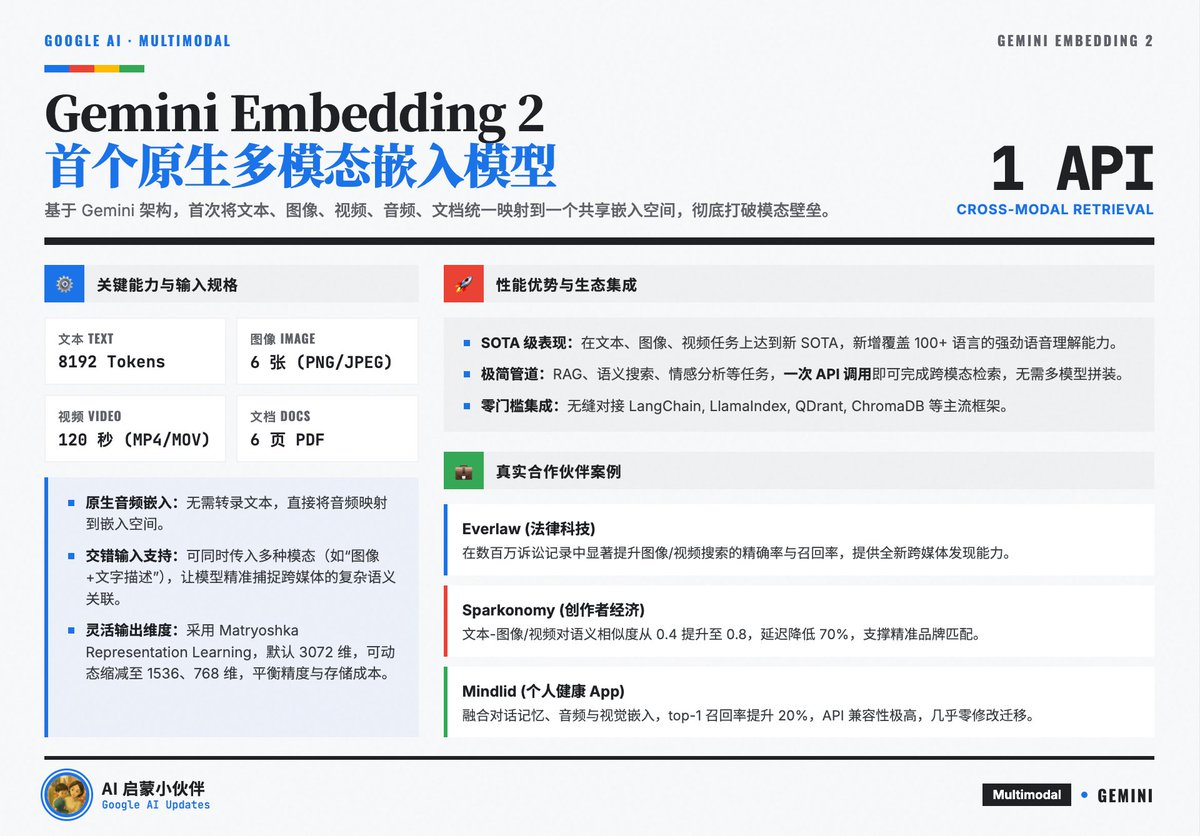
Google Gemini Embedding 2 is its first native multimodal embedding model, unifying text, images, video, audio, and documents into a shared embedding space, supporting interleaved input and flexible dimension output. This model achieves SOTA across various tasks and simplifies downstream pipelines like RAG and semantic search. Developers can leverage it to streamline cross-modal data processing, reduce integration costs, and enhance application capabilities.
Copilot CLI Beginner Tutorial ⭐ 7
GitHub officially released a beginner tutorial for the Copilot CLI programming assistant, covering the full path from installation to production-level workflows, detailing Interactive, Plan, and Programmatic modes, and context management techniques. For indie developers, understanding and mastering Copilot CLI’s Agent and Skill features can significantly boost coding efficiency, reduce debugging and testing costs, and accelerate project development through coding workflows (e.g., code review, refactoring, test generation).

ChatGPT Adds Interactive Learning ⭐ 7
ChatGPT has launched an interactive learning feature covering over 70 core math and science concepts, available to free users, allowing real-time variable adjustment and formula manipulation. This feature is valuable for indie developers or education product developers looking to use AI for learning assistance and prototyping. They can explore how to integrate interactive, visual learning methods into their own products to enhance user experience and educational effectiveness.
Tencent WeChat Developing AI Agents ⭐ 7
News reports indicate that Tencent is developing AI agents for WeChat, which will exist as chat dialog boxes in the message list. This may signal a trend of deep integration of AI assistants into super apps. Indie developers should pay attention to such giant movements, considering how to enter the ecosystem with services or small tools, or explore similar AI agent integrations on other IM platforms to capture traffic entry points.
New Direction for AI-Generated Design ⭐ 8
AI-generated design products are becoming popular, capable of generating HTML and images, supporting layered composite editing, and even AI-controlled image retouching. For indie developers, this means more AI-driven design tools will emerge, lowering development barriers. They can explore integrating these capabilities into their vertical applications or developing design assistance tools based on these new paradigms.

Cardpack Launch: AI Design Product Direction ⭐ 7.5
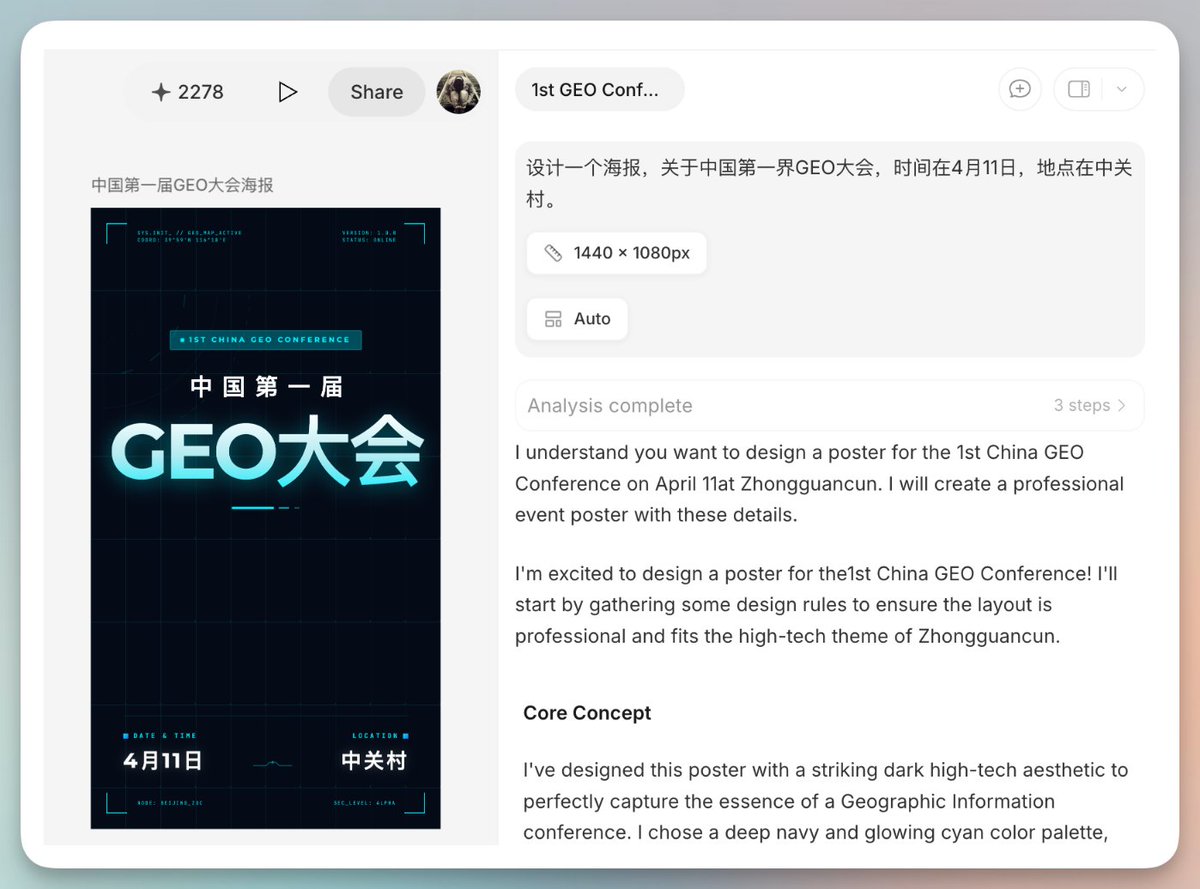
New AI design products like Cardpack are emerging, for example, generating editable posters from a single sentence, significantly boosting professional design efficiency. Indie developers should follow the latest advancements in AI design, consider integrating these tools into their products, or develop AI design assistance applications for vertical markets, seizing opportunities in the AI-powered creative industry.
Fish Audio Open-Sources S2-Pro Audio ⭐ 7.5
Fish Audio has open-sourced the S2-Pro audio model, which produces good text-to-audio effects, and audio cloning performs excellently in emotion and timbre restoration. Indie developers can leverage these open-source models for innovation in audio content creation, virtual assistants, audiobooks, and other fields, lowering the technical barrier for speech synthesis and cloning, and accelerating product development.
Sora New Feature: Save Reference Image ⭐ 6
Sora has launched features like saving image references/prompts, making them reusable when generating videos. Generative AI tools are constantly iterating, and indie developers should pay attention to such features to use AI more efficiently for content creation and consider how to integrate such “asset management” functions into their creative workflows or related applications.
Zuckerberg Acquires AI Companies ⭐ 6
Meta founder Mark Zuckerberg is actively acquiring AI companies, reflecting the fierce competition and rapid deployment of tech giants in the AI field. Indie developers should monitor market dynamics and understand the strategies of major players, as this may influence the development direction of AI infrastructure, platforms, and tools, providing clues for entrepreneurial opportunities or collaboration directions.
Indie Dev & SaaS
Cloudflare Adds Crawler API ⭐ 9
Cloudflare has added a /crawl crawler API that supports crawling an entire site from a starting URL, returning HTML, Markdown, or JSON formats, with a maximum crawl of 100,000 pages, and headless browser rendering support. For indie developers, this API can significantly simplify data collection processes. Combined with Workers AI, it can directly perform structured data extraction, naturally fitting RAG knowledge base scenarios, making it a powerful tool for building AI applications and data services.
Cron Job Self-Diagnosis Prompt ⭐ 8.5
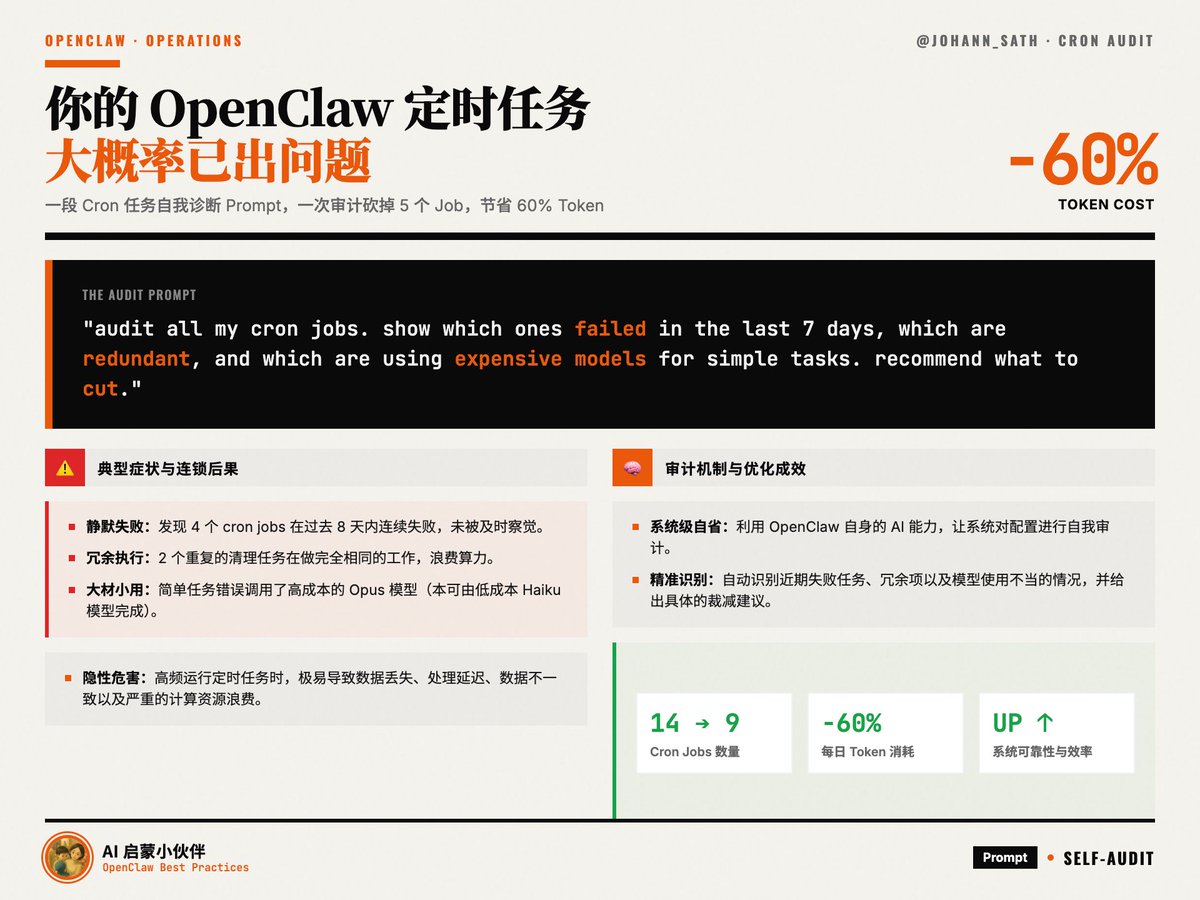
A Cron job self-diagnosis prompt can leverage AI’s auditing capabilities to identify failures, redundancies, and improper model usage in scheduled tasks, and provide trimming suggestions. For indie developers, this prompt offers a low-cost approach to optimizing AI Agent operational efficiency. Automated auditing can significantly save token consumption and improve system reliability, preventing data loss or resource waste due to scheduled task issues.
CLI Tool Ecosystem Update ⭐ 8.5
Developer jackwener has updated his CLI tool ecosystem, including reverse engineering tools for platforms like Xiaohongshu, Twitter, and Bilibili. It now uniformly supports --yaml/--json output, integrates SKILL.md for AI Agent calls, and strengthens anti-risk control mechanisms. For indie developers, these tools provide command-line interfaces for direct social media platform operations, usable for automation, data analysis, and building AI Agent-based workflows, greatly enhancing development efficiency and application possibilities.
AI Opportunity: Bottleneck is Product ⭐ 8
The article points out that AI provides powerful productivity (10,000 3D printers and cheap raw materials), but the current bottleneck is how to produce valuable, profitable products and how to find a market. For indie developers, this reminds us that while technology is important, we need to focus more on market demand and business strategy, transforming AI capabilities into products that solve real problems and generate revenue.

Claude Code vs. Codex Comparison ⭐ 8
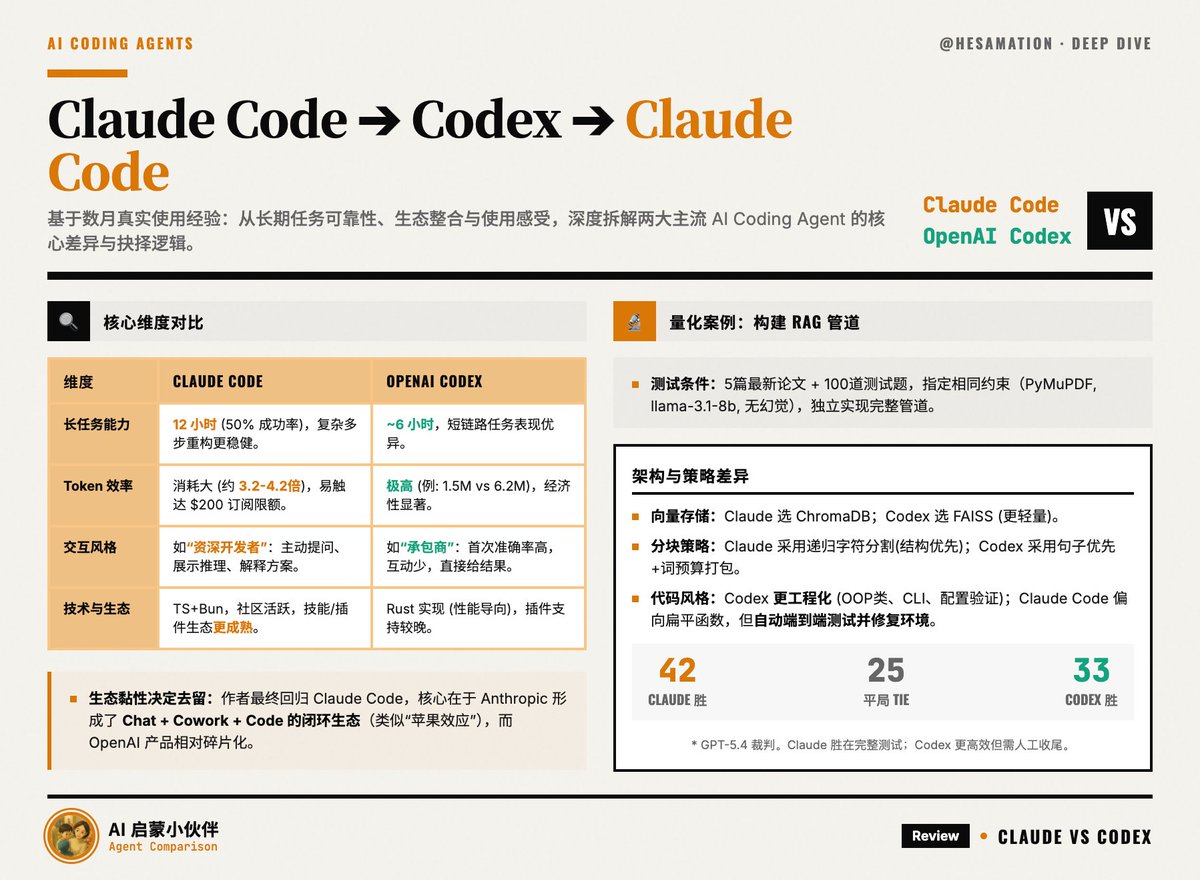
Hesamation conducted an in-depth comparison of Claude Code and Codex, two mainstream AI Coding Agents, noting that Claude Code performs better in long-task reliability, while Codex has a slight edge in token economics. Indie developers should choose the appropriate AI Coding Agent based on project characteristics, considering its performance in long-term task support, cost-effectiveness, ecosystem integration, and community activity to best fit their workflow.
After Flomo Supports MCP ⭐ 7
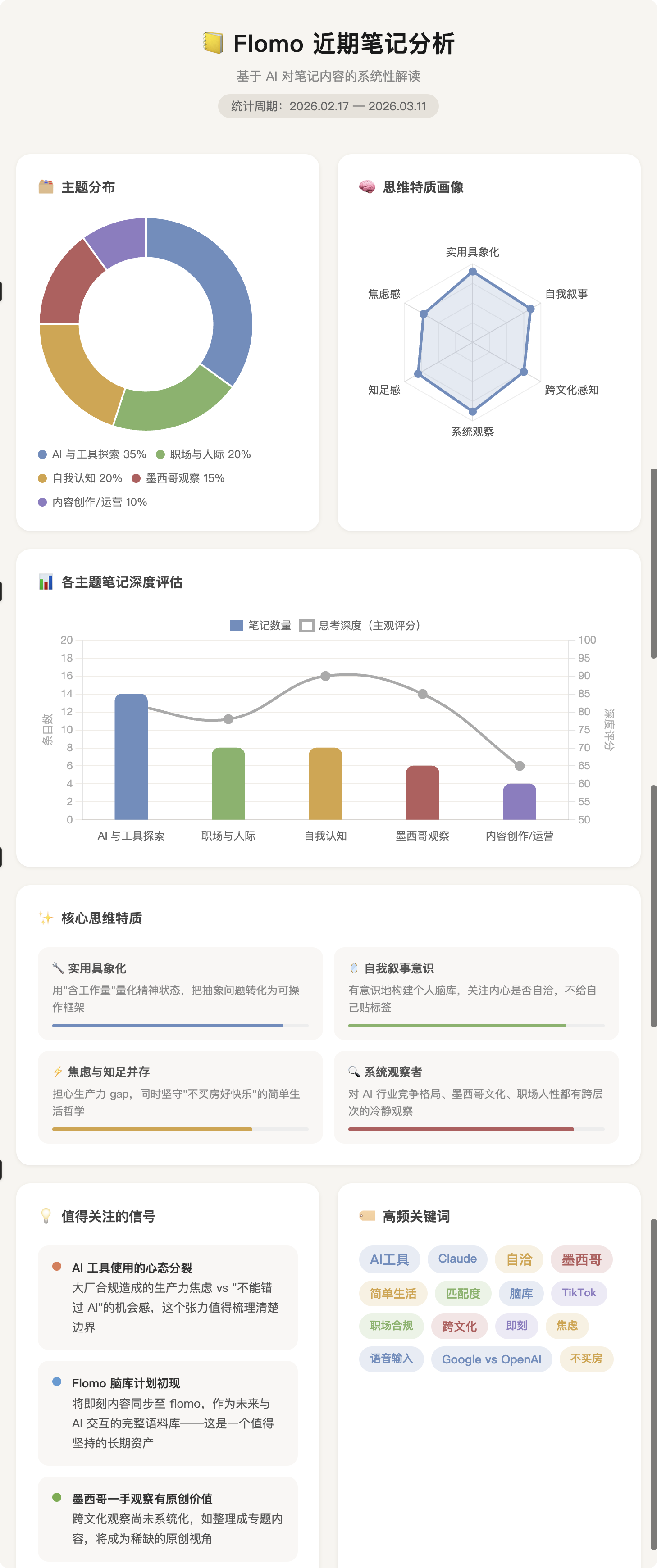
After Flomo supported MCP, users’ fleeting thoughts can be used as raw material to feed AI for various applications. This suggests to indie developers that connecting users’ existing notes, knowledge management tools, and AI is a promising direction. It can transform fragmented information into valuable AI input, thereby creating more intelligent services and application scenarios.
John Carmack on Architecture ⭐ 6.5
John Carmack mentioned that inexperienced developers often struggle to understand that architectural planning for future needs rarely yields a net benefit. For indie developers, this is an important warning: avoid over-design during development, focus on current pain points and core functionalities, adopt the ‘YAGNI’ (You Ain’t Gonna Need It) principle, and prioritize rapid iteration and validation over spending extensive time on uncertain future architectures.
Old Server Upgrade Story ⭐ 6.5
A blogger shared the story of upgrading a seven-year-old server. He used AI to generate server configuration scripts, achieving rapid deployment and automation for the new server. This case demonstrates AI’s potential in infrastructure automation. Indie developers can learn from this experience to use AI to improve operations efficiency and reduce server management burden, especially when rapid deployment and configuration of new environments are needed.

Open Source Projects
git-pkgs GitHub Actions Launched ⭐ 6
git-pkgs now offers GitHub Actions, simplifying dependency history queries, vulnerability scanning, license checks, and other operations in CI/CD. For indie developers and teams, this greatly reduces integration costs. With a few lines of YAML, dependency difference analysis, high-risk vulnerability warnings, and license compliance checks can be performed at the PR stage, ensuring project dependency security and compliance.
Social Media Hot Takes
AI Automated Email Reports ⭐ 8.5
A user shared their AI assistant’s ability to automatically read emails and generate reports daily, and integrate their schedule with Google Calendar using Google Workspace CLI and Codepilot. This demonstrates AI’s powerful potential in personal productivity enhancement. Indie developers can consider how to integrate similar automation tools into personal or team workflows to improve daily work efficiency and free up more time for core development tasks.

LLMs Are Bad at “Understanding” Specifications ⭐ 6.5
The article points out that when writing formal specifications, LLMs tend to generate “obvious” properties rather than deeper ones that can capture “subtle” errors like concurrency or non-determinism. For indie developers relying on AI for code generation or specification design, this reminds us that AI still needs human expert guidance and cannot fully replace complex logical reasoning and rigorous specification validation. Especially when critical system behavior is involved, manual review is still necessary to ensure correctness.
Don’t Fall into AI Anxiety ⭐ 6
The article refutes the hype about “falling behind if you don’t use AI,” pointing out that AI is not magic but a continuation of technological progress, with its core being search and optimization. For indie developers, this means not blindly chasing all AI hot topics, but focusing on creating value, avoiding zero-sum games, viewing AI as a tool rather than everything, and being wary of resource waste and unrealistic expectations caused by “AI panic.”