05-18-Daily - AI Hot Daily
AI Hot Daily 2026/5/18
Daily curated AI + indie dev news
Today’s Summary
AI is reshaping workflows. Codex can distill user habits, Zero language is designed for Agents, and Copilot will become independent.
Agents need planning and verification to successfully execute long-term tasks. Improving AI Agent efficiency requires balancing human and machine oversight.
AI has immense potential but also faces limitations. Community events focus on AI entrepreneurship, and Salesforce embraces API-driven approaches.
AI Technology & Products
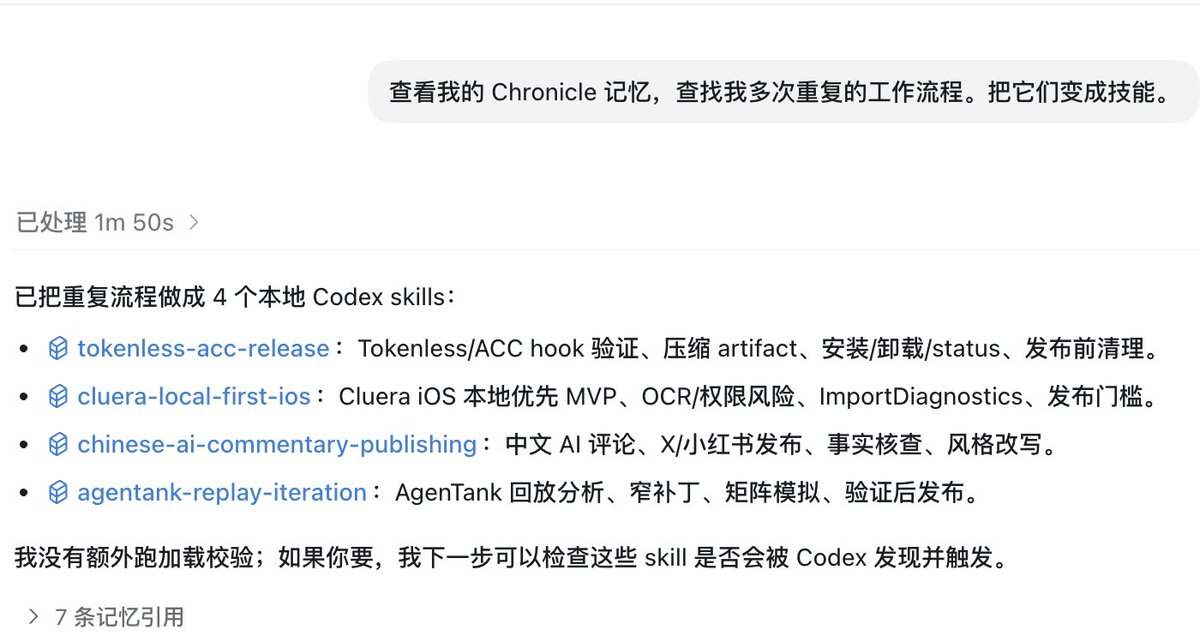
Codex Deep Dive: Autonomously Distilling Personal Workflows ⭐ 9.5
A new use for Codex has been discovered: by analyzing user memory and operation logs, it can automatically distill repetitive user workflows and integrate them into reusable skills. This ability for Agents to observe and distill users’ implicit habits in reverse suggests that personal skill libraries may become more valuable than prompt libraries in the future.
Vercel Releases Zero: A Programming Language Designed for Agents ⭐ 9
Vercel has launched a new programming language called Zero, specifically designed for Agents. The language aims to be smaller, faster, and easier for Agents to use and fix, featuring explicit capabilities, JSON diagnostics, and type-safe fixes, built from the ground up for Agents.

GitHub Copilot App is Coming Soon ⭐ 8.5
Following the Codex App, GitHub Copilot will also launch its standalone application version. Users can apply for access here, indicating further integration and independence for Copilot’s features.
Atomic Bot Comparison Sparks OpenClaw vs Hermes Agent Debate ⭐ 8.5
Atomic Bot released a video comparing the performance of local models Qwen 35B on real-world tasks, sparking a heated debate between prominent figures OpenClaw and Hermes Agent. The discussion focused on the scientific rigor of benchmarks, model performance, and actual user data.

AI-Driven Long-Term Tasks: Planning and Verification are Key ⭐ 8.5
This article emphasizes that planning and verification are crucial for AI to execute long-term tasks. It suggests breaking down tasks into stages with clear verification methods, such as automated testing. This is particularly important for scenarios involving extensive code migration and comprehensive test coverage, as AI can easily deviate from the goal otherwise.
WeRead Skill: Analyzing Personal Reading Data ⭐ 8
Teacher Yao has developed and open-sourced a WeRead Skill that deeply analyzes users’ reading data. It generates local visual reports with 26 charts, including reading time, book preferences, and note analysis, providing users with personalized reading insights.

The Illusion of Generative AI and World Models ⭐ 8
This piece discusses the limitations of generative AI, the risks of massive investment, and the urgent need for world models and neuro-symbolic AI. It highlights the importance of software verification in the era of LLMs and points to the promising future of AI Agents.
Staff Engineer’s LLM Usage Experience Sharing (2026) ⭐ 8
A Staff Engineer shares their experience using LLMs in 2026, focusing on the significant improvements in AI Agents’ capabilities for generating entire PRs, debugging bugs, and automating tests. The author emphasizes the balance between the efficiency of AI Agents and human supervision, while remaining cautious about AI’s use in writing and UI testing.
Drata: Automating Compliance and Security ⭐ 7
Drata is a company that uses autonomous AI Agents to automate compliance, manage internal and third-party risks, and continuously demonstrate security posture. The article briefly outlines its core value in improving compliance and security management efficiency through AI.
AI News Daily - May 17th ⭐ 7
A link to an AI News Daily report, compiling the day’s AI-related news and updates for users to quickly grasp the latest industry information.

Z-Anime: Locally Runnable Anime Image Generation Model ⭐ 7
Z-Anime is an anime image generation model fine-tuned from Z-Image Base, specifically designed for generating anime-style images with excellent results that can be run locally. The model has been released on Hugging Face.

Opus 4.6 is Best for Writing, Gemini 3.1 Pro is Best for Translation ⭐ 7
The blogger shares their evaluation of current writing and translation models: Opus 4.6 performs best for writing, while Gemini 3.1 Pro excels in translation. Additionally, the blogger is soliciting user feedback on suggestions and pain points for improving the Codex model.
OpenAI Codex Advanced Usage Guide
This is a series of usage guides for OpenAI Codex, covering configuration, commands, tool usage, and practical tips. It aims to help developers master Codex’s features and improve their development efficiency.
Mastering Codex: From Beginner to Advanced Techniques
This article provides an in-depth explanation of Codex’s advanced features, from basic configuration to unlocking its full potential, aiming to help developers become Codex masters and significantly boost their development efficiency.
Using Codex in Your Terminal, IDE, and Web
A practical guide explaining how to integrate and use OpenAI Codex in different environments, connecting natural language with code, reducing context switching, and improving development efficiency.
Indie Development & SaaS
Claude Team: Handbook for Building an AI-Native Startup Team ⭐ 8.5
The Claude team provides a practical handbook for founders on how to build an AI-Native startup team, emphasizing the core role of AI in team building and operations.

Offline Meetup for AI Entrepreneurs: Discussing Specific Problems and Products ⭐ 8
The AI Next community is hosting offline meetups in Beijing and Shenzhen, focusing on how AI entrepreneurs can solve specific problems using AI. The emphasis is on product discussion rather than abstract viewpoints. AI Natives who have launched products or encountered real roadblocks are welcome to attend.

The Shift in Enterprise Software: APIs as the New UI ⭐ 7.5
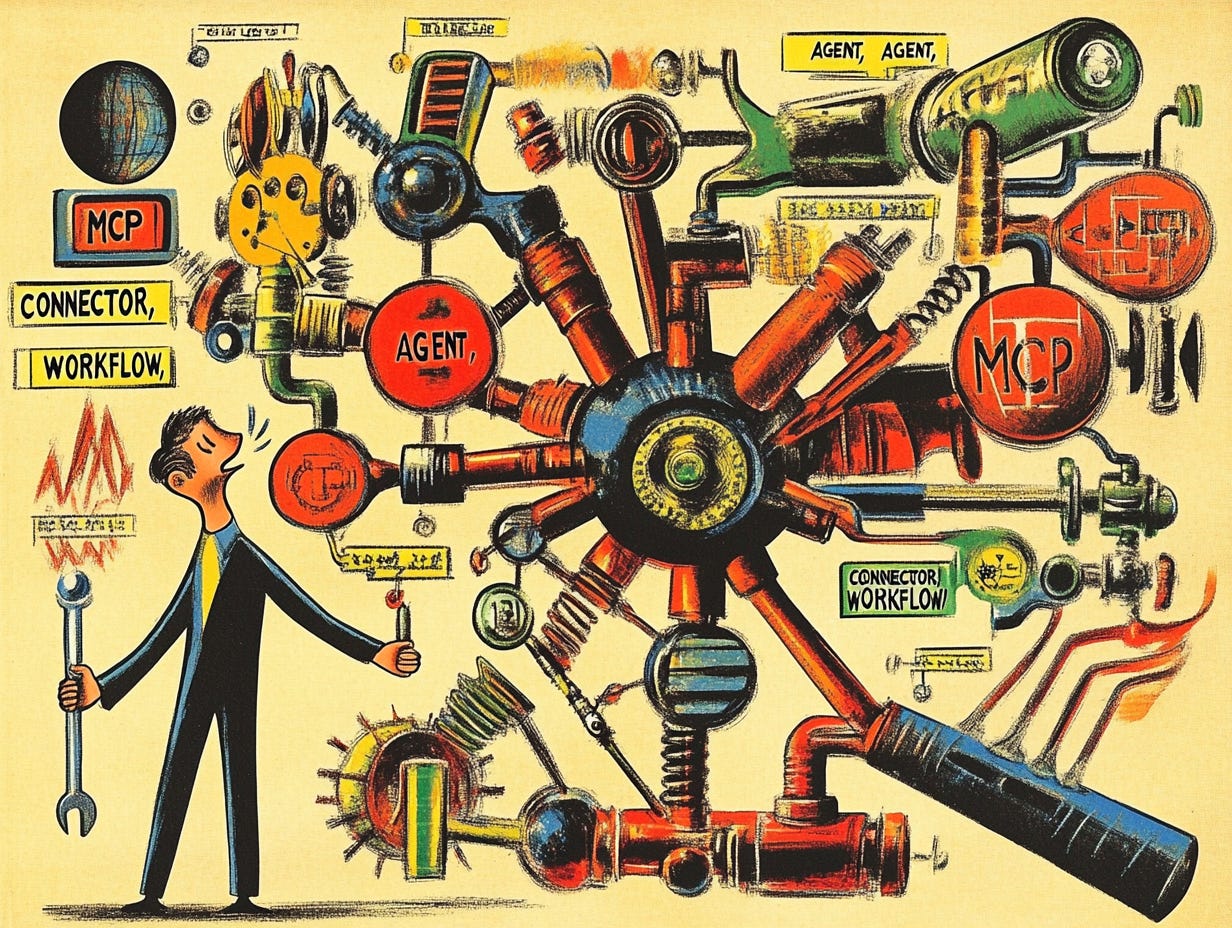
Salesforce’s release of Headless 360 signifies that APIs will replace UIs as the primary interaction method. The article predicts that future enterprise software will tend to provide “raw materials” for customers to assemble themselves, creating numerous new “Pit Crew” roles to adapt to this change.
Open Source Projects
Zerostack: A Unix-like Pure Rust Coding Agent ⭐ 9
Zerostack is a Unix-like coding Agent written entirely in Rust, boasting extremely low memory usage (around 8MB-12MB) and excellent performance. It has generated significant community discussion, with developers delving into its memory efficiency and how Agents operate.
The Evolution of OpenClaw: From Warelay to OpenClaw ⭐ 7
The blogger traces the naming history of the OpenClaw project, from its initial name Warelay to its current iteration, passing through CLAWDIS, CLAWDBOT, Clawdbot, and Moltbot, illustrating its evolution within the Git commit history.
Industry News
The Challenge of Long-Term Validation for AI Scientific Breakthroughs ⭐ 7.5
This article explores the role of AI in scientific discovery, pointing out that the validation cycle for scientific theories is long and complex, making it difficult for AI to achieve major conceptual breakthroughs solely through simple RL loops. It emphasizes the importance of human judgment, long-term persistence, and diverse research directions.
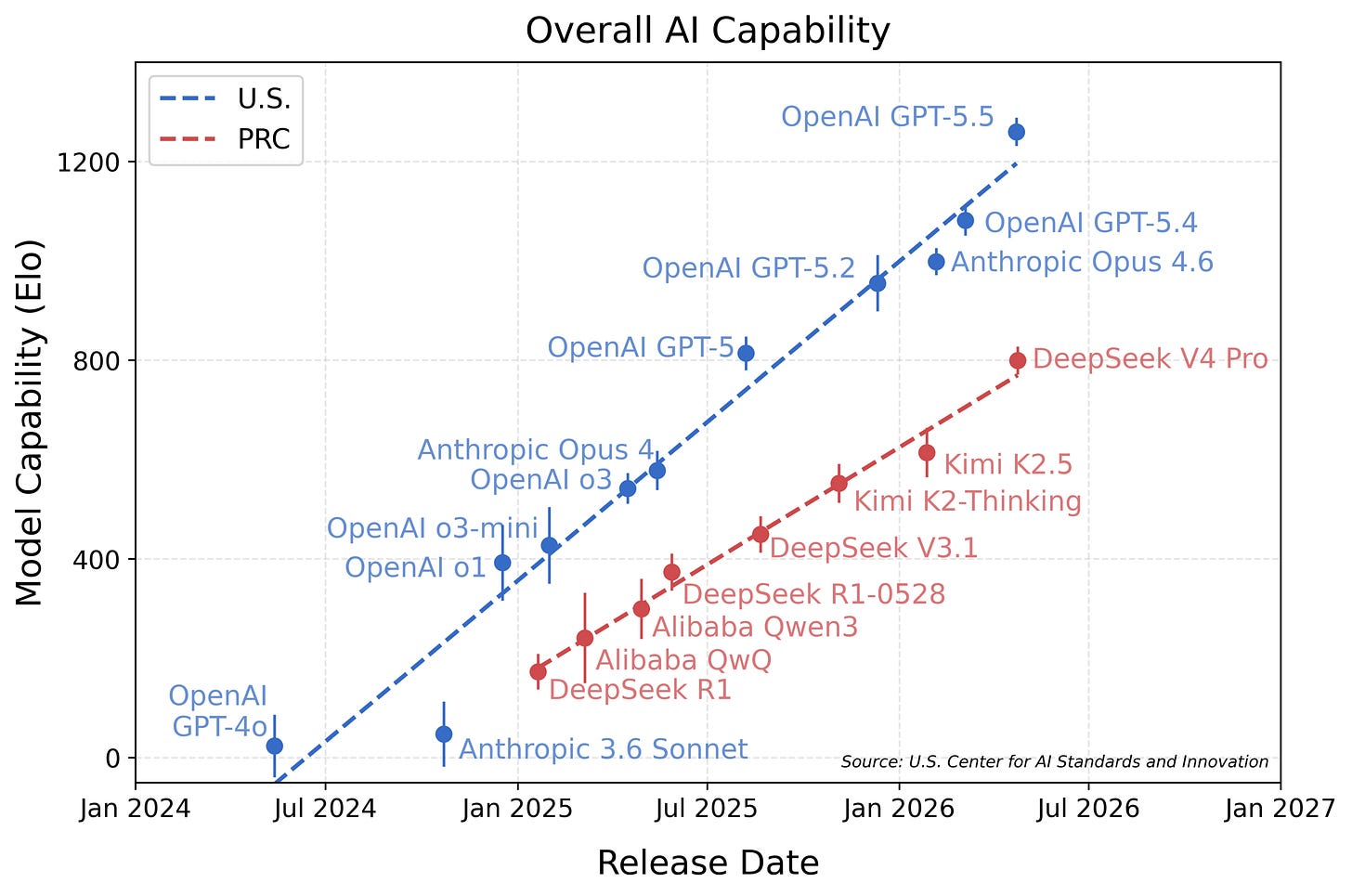
Latest Open Source Models: Gemma 4, DeepSeek V4, etc. ⭐ 7.5
This compilation features several recently released open-source models, including Gemma 4, DeepSeek V4, and Kimi K2.6. The article analyzes CAISI’s evaluation of these models against leading US models, discussing the capability gap between open-source and closed-source models and the limitations of benchmarks.
AI Won’t Necessarily Speed Up All Your Processes ⭐ 7
The author of this article is skeptical of the notion that AI will inevitably speed up all processes. They argue that while AI may accelerate specific steps, coordination and alignment issues remain. The importance of reducing coordination overhead and empowering individual decision-making is highlighted, along with the quality-speed trade-off introduced by AI.
Parallelization and Failed Runs in AI Training ⭐ 7
This piece delves into parallelization strategies (such as data parallelism and expert parallelism) in the pre-training of large-scale AI models, as well as common causes of failure (like breaking causality or introducing bias). The article suggests that automating kernel writing for AI is unlikely in the short term.
The Mistake of Conflating Intelligence and Power ⭐ 6
The article points out that people often confuse intelligence with power. The author argues that true power stems from trust and collaboration, not individual computational ability. The development direction of AI (e.g., optimizing specific tasks) is not strongly correlated with how power is acquired, and competition between companies will be about automated teams rather than individual AIs.
Social Media Buzz
AI Art Inspiration and the Line Between Inspiration and Plagiarism ⭐ 6
This article explores the art of drawing inspiration from others’ work without resorting to plagiarism, using masters like Bach, Thompson, and Picasso as examples. It emphasizes that understanding the core mechanisms and creative motivations behind a work is more important than superficial imitation. In the age of large models, the cost of superficial imitation has decreased, and the real challenge lies in judgment and creativity.

Zhang Xiaoyu’s Prediction on Human-AI Collaboration ⭐ 6.5
A repost of Zhang Xiaoyu’s remarks, sparking discussion on human-AI collaboration models and speculating on how his comments might foreshadow new forms of human-machine synergy in the future.