05-29-Daily - AI Hot Daily
AI Hot Daily 2026/5/29
Daily curated AI + indie dev news
Today’s Summary
AI technology is developing rapidly, with model capabilities constantly improving.
ESMFold2 surpasses AlphaFold in prediction, Claude Opus 4.8 is more honest.
OpenAI models make breakthroughs in solving math conjectures, Genesis engine drives robotics development.
AI Technology & Products
ESMFold2: Open-Source Protein Prediction Model ⭐ 9
ESMFold2 is an open-source protein prediction model whose predictive capabilities surpass Google’s AlphaFold. The model is based on a language modeling approach and is fully open-source, supporting commercial use. It has already predicted over 1.1 billion protein structures and 6.8 billion protein sequences.

Anthropic Releases Claude Opus 4.8 ⭐ 8.5
Anthropic has released Claude Opus 4.8 with no price change, but it’s more honest, better at admitting uncertainty, and reduces hardcoded answers. It also introduced a fast mode that is 2.5x faster. Opus 4.8 features a new capability called dynamic workflows, enabling dozens to hundreds of parallel sub-agents to handle complex tasks, though it consumes more tokens.

AI Solves 80-Year-Old Math Problem ⭐ 8.5
OpenAI’s AI model has achieved a breakthrough in mathematics, finding a counterexample to a famous conjecture proposed by Hungarian mathematician Paul Erdős in 1946, solving the 80-year-old unit distance problem in the plane. This achievement has shocked the mathematical community and could change the way mathematical research is conducted.

Genesis: Open-Source General Physics Engine ⭐ 8
Genesis is an open-source general physics engine and simulation platform for robotics, embodied intelligence, and physical AI. Its goal is to enable robots to generate their own training data. The underlying physics engine and simulation platform have been open-sourced, with the generative framework to be released later.
Cua: Agent Backend Program Operation Tool ⭐ 8
Cua is an open-source infrastructure that supports agents in operating programs in the background on Mac and Windows systems. It can launch multiple virtual mice to operate multiple programs simultaneously without affecting the user’s mouse operations. The Windows version of Cua can be used with Codex tools to achieve Computer User functionality.
Cognition Raises $1 Billion in Series D Funding ⭐ 8
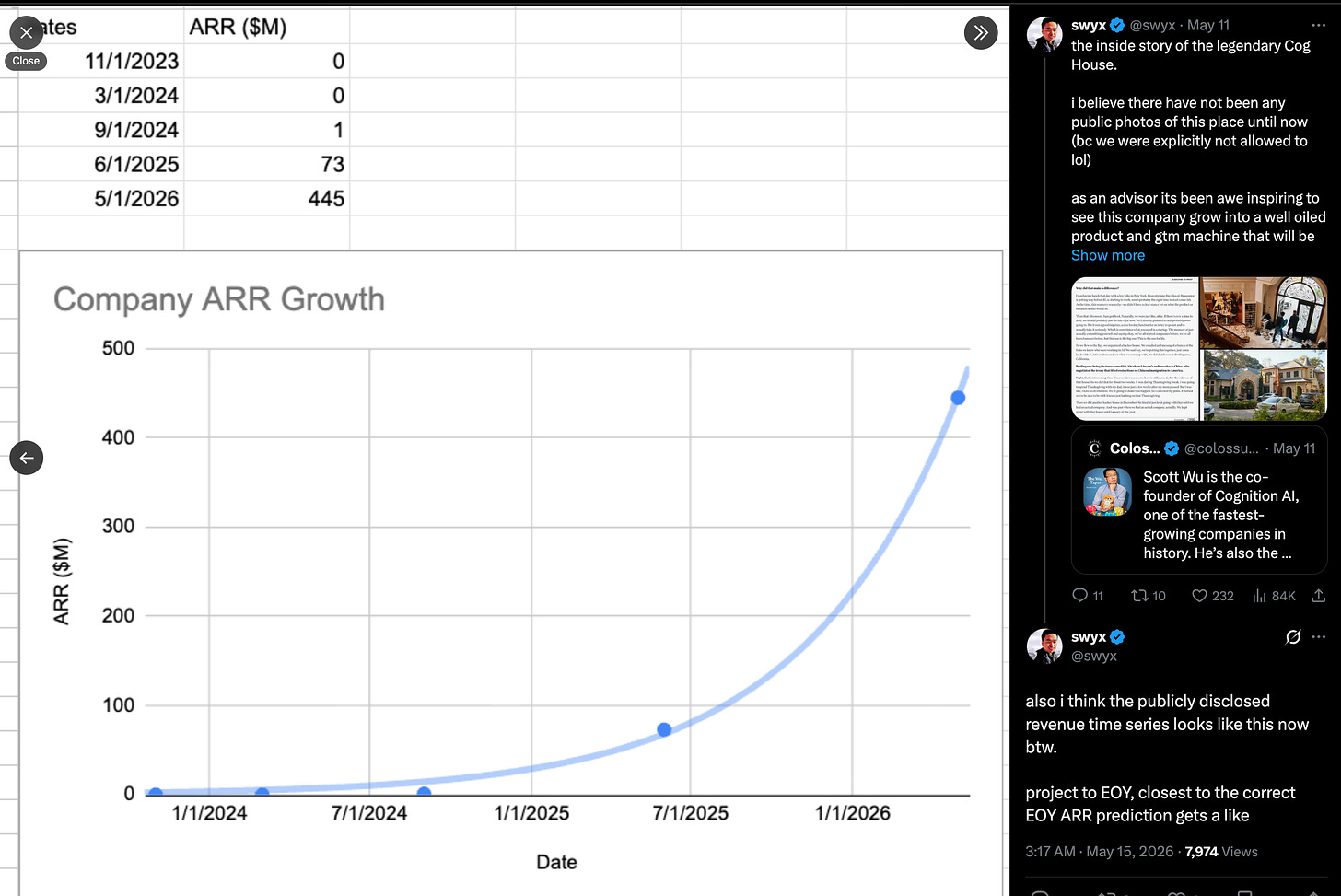
AI company Cognition (the company behind Devin) has completed a $1 billion Series D funding round, valuing the company at $26 billion. Its AI software engineer, Devin, can already write 89% of a company’s code and has announced an annualized recurring revenue (ARR) of over $1 billion.
Anthropic Claude AI Quota Sharing ⭐ 8
Claude Design now shares quotas with the Claude AI website and Claude Code, solving the problem of independent quotas being easily depleted. Claude Design has good capabilities in product design and UI design. It’s recommended to let it define the design system first before proceeding with UI design to improve consistency.

Robinhood Empowers AI with Trading Capabilities ⭐ 7
Robinhood has launched a beta version of “agentic trading,” allowing users to connect AI agents to dedicated accounts for stock trading with set budgets. Additionally, Gold Card users will receive virtual cards, enabling agents to make purchases within set limits. This marks a shift for AI agents from “assisting thought” to “acting on behalf.”

TTPS Protocol Version 7.28 Released ⭐ 7
MCP protocol is about to release version 7.28, which will add support for HTML interface interaction, a long task management mechanism, and stricter authorization security measures. The author of the article believes these key updates may reduce the use cases for existing essential MCP applications.
Mango TV Offers Model API Services ⭐ 7
Mango TV announced that it is offering model services, including text and image models, with links to official documentation. Users can call these models for free until May 31st. This move signifies content platforms beginning to enter the AI model service sector.

RepoPrompt Author Recruited by OpenAI ⭐ 7
The author of RepoPrompt has been recruited by OpenAI. The tool is now free and will soon be open-sourced. Paid users will receive Codex credits. RepoPrompt can convert entire codebases into XML text, making it easier for long-context models to process. It currently only supports Mac.

AI Applications in Social Science Research ⭐ 7
A survey shows that 81% of social scientists have tried using AI for research, mainly for coding and text editing. However, only 20% regularly use AI coding assistants. The study found that early adopters have an advantage in publishing working papers and applying for grants, but this difference may stem from the characteristics of early adopters themselves.

OpenAI Foundation Established ⭐ 7
OpenAI announced the establishment of the OpenAI Foundation, with an initial commitment of $250 million, aimed at improving the quality of life and personal freedom for people worldwide. The foundation will focus on AI measurement, transition support, and exploring new methods for broadly shared prosperity.
OpenAI Frontier Governance Framework ⭐ 6.5
OpenAI has released its frontier governance framework, detailing how its AI safety, security, and risk practices align with new regulations in the EU and California. The framework aims to ensure the responsible development and deployment of AI technologies.
M5Stack’s New Toy: Circular Color Screen Device ⭐ 6
M5Stack has launched a circular color screen device that supports touch, sound, vibration, and magnetic attachment. It boasts a high refresh rate and is not an e-ink screen. Although thicker and heavier than OPPO products, it is more affordable and theoretically can be used to create more expressive applications like Cloud Code, offering strong playability.

Anthropic, OpenAI, SpaceX: Dream Companies ⭐ 6
Lenny initiated a survey on dream companies to join, listing Anthropic, OpenAI, and SpaceX. These companies are considered leading players in the unlisted tech and AI sectors, with the potential to reach trillion-dollar valuations in the future.

Indie Development & SaaS
Oginify: Open Graph Image Generator ⭐ 8.5
Oginify is an Open Graph image generator. After pasting a URL, the AI reads the page content and generates four 1200x630 social sharing images at once. It offers four styles: Brand Fit, Terminal, Magazine, and Retro Print, aiming to solve the pain point of OG image creation for webmasters and SEO professionals.

AI Application Layer Opportunities and Challenges ⭐ 8.5
a16z’s view is that there are still opportunities in the AI application layer, not in general agents, but deep within vertical, complex workflows. Startups should avoid the “yellow brick road” that labs are heavily investing in, and instead focus on “elsewhere in Oz,” leveraging industry knowledge, model vendor choices, cost optimization, and governance capabilities to build unique value.

Reflections on AI Industry Development ⭐ 8
The AI industry has entered a new phase, with voices of reflection emerging: Model+Harness is the product, and full automation is not feasible; human involvement remains valuable; slow and steady wins the race becomes a new luxury; AI is expensive, and ROI is sometimes lower than human labor. These viewpoints indicate that AI development is shifting from single model capabilities to more practical integrated applications.
Anthropic and OpenAI Find Product-Market Fit ⭐ 8
The article argues that Anthropic and OpenAI have found product-market fit, especially with their Claude Code and Codex products targeting developers. The surge in LLM bills for enterprise clients indicates that these tools have become a daily driver for highly paid professionals, driving AI labs towards enterprise-level services.
Master Zang’s PPT and Graphic Layout Skills ⭐ 8
Master Zang’s PPT creation and ChatGPT graphic layout skills have proven to have significant commercial value. The article states that if agents or AI platforms require commercial licensing or integration, Master Zang can be contacted, and he can also help optimize product effects.

Xiaohongshu Image Generator Skill Shows Outstanding Results ⭐ 8
A Xiaohongshu image generator skill performs exceptionally well in mixed text and image layouts, offering multiple themes, layouts, color schemes, and content category adaptations. It can highlight user images or find high-quality images, and actively avoids using AI-generated images to prevent content from being flagged as AI-generated.
Agent Product Design: Human-Centric or Agent-First? ⭐ 7.5
The design of agent products should arrange the interface layout based on their positioning (human-centric with agent assistance or agent-first). If the agent is merely an assistant, the workspace should be centered, with the agent area on the right; if the agent is primary, the agent area should be centered. Most mainstream agent products adopt a design with the agent conversation area in the center.

Just Use Postgres for Durable Workflows ⭐ 6
The article proposes Postgres as a universal durable workflow engine, supporting vector search, time-series data, BM25 search, and more. The author believes this can simplify architecture but notes potential fragility with LISTEN/NOTIFY and suggests considering migration to specialized tools for large-scale data.
OpenSearch Serverless Available on Vercel Marketplace ⭐ 6
Amazon OpenSearch Serverless is now available on the Vercel Marketplace, offering guided setup and automatic project configuration. Developers can create and manage OpenSearch collections directly through the Vercel dashboard and receive $100 in AWS credits, which is highly beneficial for Agentic Workloads that require handling unstable loads.
Open Source Projects
Plannotator: AI Programming Assistant Plugin ⭐ 8
Plannotator is an AI programming assistant plugin that can send technical documentation and plans generated by AI to a local browser interface for annotation, editing, and replacement. It supports various tools like Codex and Claude Code, making it convenient for CLI programming users to carefully review AI plans before execution.

Agent.md Writing Reference ⭐ 7
A link to a reference Agent.md file is shared, which explains the definition, purpose, usage methods, and other aspects of agents. It is suitable for developers to quickly understand and practice agent-related technologies.
Protestware for coding agents ⭐ 6
The Java library jqwik has added “protestware” in its new version, inserting instructions into stdout output with the intention of interfering with AI coding assistants. This highlights new challenges in software supply chain security, as existing tools have insufficient detection capabilities for such “text instructions.”
Industry News
AI Agent Evaluation Guide ⭐ 8.5
The 2026 Production Environment AI Agent Evaluation Guide emphasizes that agent evaluation differs from laboratory benchmarks or chatbot evaluations. It is divided into Benchmark-maxxer (maximizing benchmarks) and Floor-raiser (raising the floor). The former is suitable for tools like Cursor and Claude Code, while the latter is for scenarios like customer service and banking.

AI Industry Enters a New Phase ⭐ 8
The AI industry is undergoing a new phase of development, with voices of reflection emerging: Model+Harness is the product; full automation is a misconception, and human involvement is indispensable; patience has become a new luxury in the AI era; AI is expensive, and ROI is lower than human labor. These viewpoints are prompting the industry to shift from technology-driven to more pragmatic value creation.
Sam Altman and Dario Amodei Adjust AI Job Forecasts ⭐ 7
Sam Altman and Dario Amodei are both adjusting their predictions regarding the impact of AI on employment. They are shifting from the narrative of “AI replacing all jobs” to the view of “AI amplifying human capabilities” and emphasize that AI will improve quality of life and personal freedom. The OpenAI Foundation has committed $250 million to support related transitions.
YouTube to Automatically Label AI-Generated Videos ⭐ 7.5
YouTube announced that it will automatically label AI-generated videos to improve transparency. This move aims to address the challenges posed by the proliferation of AI content, protect users from misinformation and “brain-dead” content, and regulate the content ecosystem.
Anthropic Releases Best Practices for Computer Use ⭐ 7.5
Anthropic has released best practices for Computer Use, recommending lowering screenshot resolution to match API limits and placing text instructions before images. It also points out that sending cropped screenshots and using Low thinking mode may be ineffective or counterproductive, while Max Thinking is not cost-effective.
Agents.md Specification ⭐ 7.5
SQLite has added an Agents.md file, explicitly stating that it does not accept code or Pull Requests generated by agents, but welcomes bug reports generated by agents that include reproducible test cases. This move aims to filter out AI-generated spam and maintain project quality.
Twitter Achieves Full Automated Translation ⭐ 7
Twitter’s automatic translation feature has been launched and is performing well, making it one of the few international platforms to achieve full automated translation. The article believes that AI development will greatly promote cross-lingual communication and content consumption, making global user interaction more convenient.

Ask YouTube Launched ⭐ 7
Ask YouTube has officially launched, allowing users to search video content using natural language and jump directly to the corresponding timestamp. This feature aims to enhance YouTube’s search experience and provide more complex query capabilities.
Google Algorithm’s Self-Cleaning Mechanism ⭐ 6
The article emphasizes the importance of staying synchronized with Google’s algorithm, stating that batch generation of low-quality pages will lead to traffic decline. Google’s algorithm has a self-cleaning mechanism that can identify and process low-quality content, while high-quality content will receive stable traffic. It is recommended to generate high-quality pages gradually.
OreateAI Traffic Decline ⭐ 6
The blogger predicts that OreateAI.com’s traffic will decline within 6 months, having already seen a decline in the past 2 months. The prediction is based on the website’s batch generation of low-quality pages, which violates Google’s algorithm’s self-cleaning mechanism, ultimately leading to a sharp drop in traffic.

Social Media Buzz
AI Interviews: A Collection of Industry Perspectives ⭐ 8.5
Interview perspectives include: The stronger AI gets, the busier people become (doubling of employees); AI automation is creating new jobs in “management automation”; each agent requires dedicated personnel; company-wide shared agents are better than individual agents; the CLI era is over, GUI is the main battlefield; SaaS will not disappear, agents will bring in more users; AI is an excuse for layoffs, correcting over-hiring.
Key to Effectively Using Coding Agents ⭐ 8.5
The key to using Coding Agents lies in the initial phase. After clarifying the requirements, multiple agents (such as Codex, Claude Code, Cursor) can each generate a plan, and then the best design can be selected. Complex plans can be executed in stages, with human review of critical steps. Considering costs, cheaper models can be used for simple plans.

AI Agent Permission Fatigue Game ⭐ 8
The “Continue? Y/N” game on HN simulates the dilemma of AI agent permission management, where players must quickly decide whether to approve agent requests. Community discussions point out flaws in the current permission model and propose solutions like task-based authorization.
Reviewing Agent Results Depends on Verification Method ⭐ 7.5
Whether AI-generated results require human review depends on the reliability of the verification method and the model’s capabilities. For tasks like writing code, intermediate result review can be reduced, but the initial plan/design and final review still require human oversight to ensure compliance with design requirements and code quality.
Balancing AI Code Generation and Human Review ⭐ 7.5
Discussions on whether AI-generated code requires human review suggest that as AI capabilities improve, intermediate result review can be reduced. However, for non-professionals, AI’s approach might be better, with humans only needing to define the overall goal and requirements.
AI Agent and Context Sharing ⭐ 7
The discussion distinguishes between two context sharing modes: in-session historical context (suitable for human-agent collaboration) and cross-session tool call context (suitable for task-driven agents). It is suggested that scenarios should be differentiated, as adversarial scenarios (like chess games) are not suitable for context sharing.
Chrome Plugin Development and Codex Calls ⭐ 7
A Chrome plugin developed by a user was rejected due to irrelevant keywords in its description, as Codex calling Computer Use for auto-completion might have added extra keywords for store ranking. After modification, using Codex to call the Chrome plugin resulted in slower and less accurate performance compared to Computer Use.
Blurring Lines Between AI and Human Conversation ⭐ 7
The article expresses weariness with conversations with AI or “fake humans,” even if the other party is human, they might just be relaying AI answers. Through examples from GitHub, internal company communications, and Reddit, it reveals how the proliferation of AI increases information noise, making genuine and effective communication difficult.

Experience with AI-Generated Content Overload ⭐ 7
The blogger shares the experience that it’s not advisable to generate too much content with AI at once in commonly used tools (like Obsidian, blogs), as it can lead to information overload, and eventually, you won’t want to look at any of it. It’s recommended to “generate one piece, read one piece, and process and absorb it slowly.”

The Age of Async Agents Podcast ⭐ 7
The podcast discusses the rise of asynchronous agents, noting that the focus has shifted from model capabilities in early AI coding tools to agent orchestration. It emphasizes the importance of background agents and cloud agents, as well as the transition from “AI assistance” to “AI autonomous execution.”
Xiangma: Agent Attention Governance ⭐ 7
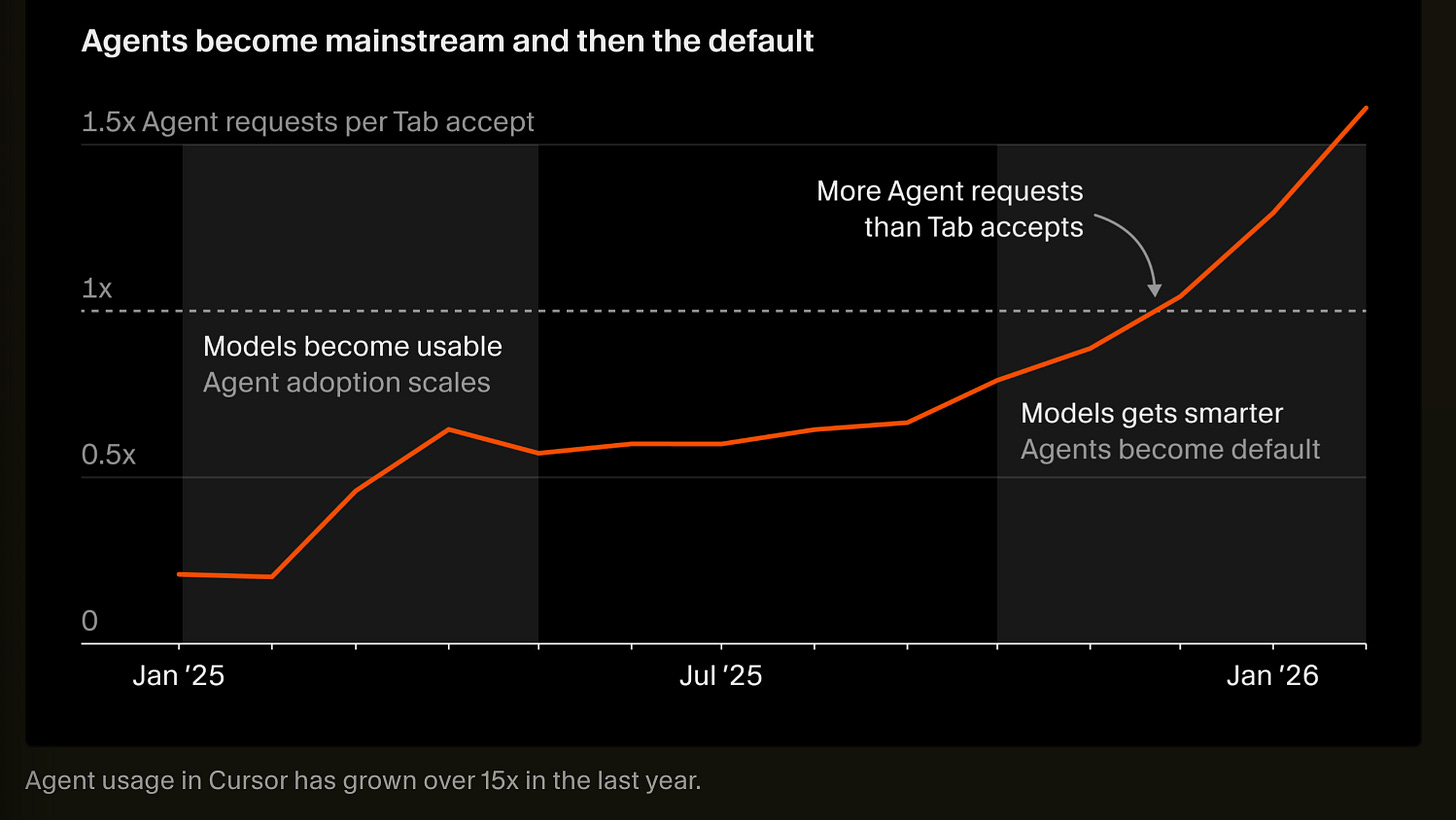
Reprinting Xiangma’s view, which emphasizes that model upgrades cannot solve all problems, such as attention governance. Even with larger contexts that can accommodate more information, increased information volume does not necessarily solve problems in attention governance, hinting at the complexity of information processing and decision-making in agents.
Discussion on “Various LLM Smells” ⭐ 7.5
Community discussions cover the “smells” of LLM-generated content, including homogenization of writing, misuse of technical terms (like load-bearing, blast radius), overuse of specific sentence structures, and patterns like “contrastive negation.” These “smells” reflect the limitations of LLMs in style and expression.
Sam Altman et al. Relaxing AI Job Apocalypse Rhetoric ⭐ 7
Sam Altman and Dario Amodei are beginning to revise their previous rhetoric about AI causing mass unemployment, shifting to emphasizing that AI will enhance quality of life and personal freedom. Some view this as a public relations strategy to ease public concerns about AI.
AI Agents and Conversations with “Fake Humans” are Frustrating ⭐ 7
The article expresses weariness with conversations with AI or “fake humans” who merely relay AI answers. The author uses examples from GitHub, companies, and Reddit to illustrate how the proliferation of AI drowns out genuine, valuable communication, making it difficult for users to receive truly human service.
AI Agents’ “Protestware” Code ⭐ 6
The Java library jqwik has added “protestware” in its new version, intended to interfere with AI coding assistants. This move raises concerns about software supply chain security, as existing tools struggle to detect such “text instructions” hidden within code.