06-06-Daily - AI Hot Daily
AI Hot Daily 2026/6/6
Daily curated AI + indie dev news
Today’s Summary
Claude AI facilitates recursive AI development, ChatGPT enhances memory systems.

AI software development and scientific applications are increasingly widespread, with a focus on balancing coding and writing.

AI shows potential in biological experiments and research judgment, but governance challenges also arise.
AI Technology & Products
Anthropic Publishes Research on Recursive Self-Improvement in AI ⭐ 9.5
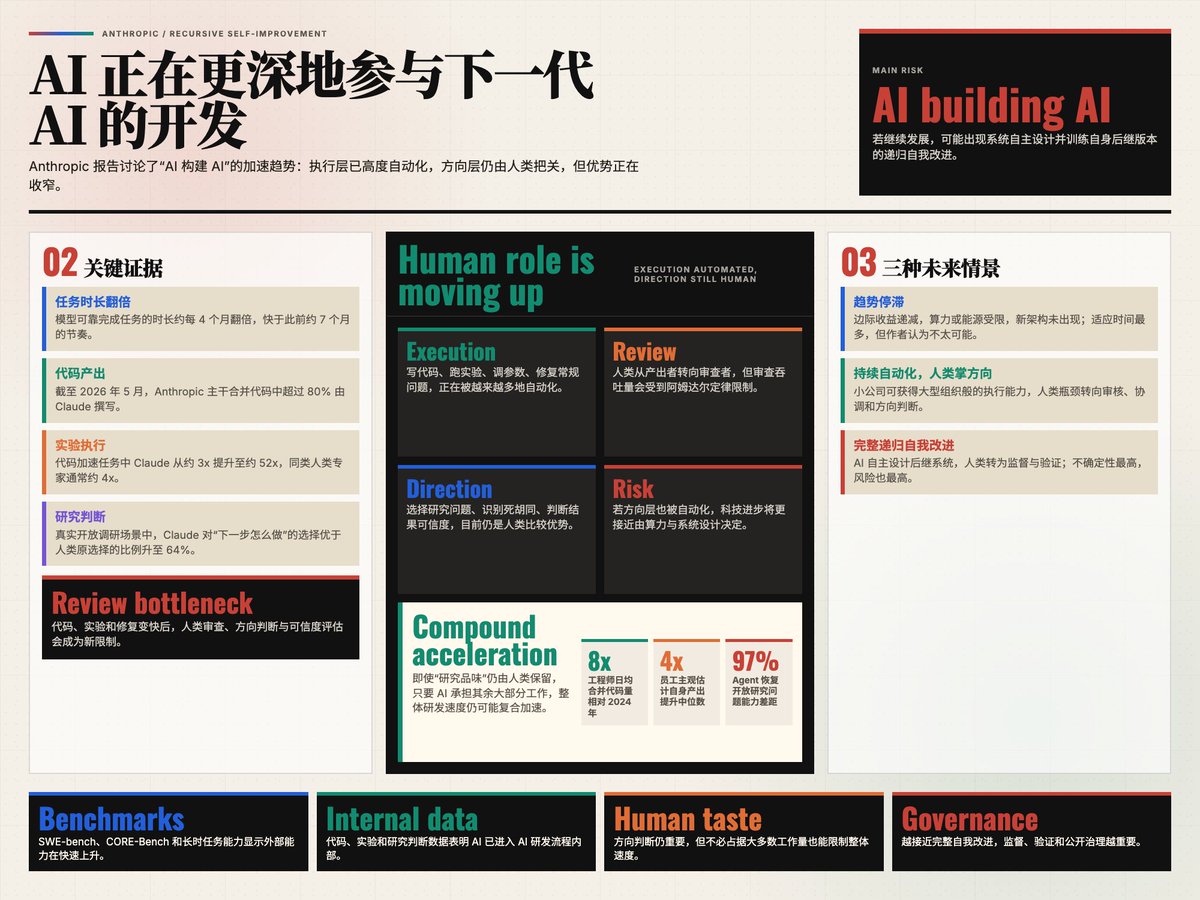
Anthropic has released a research report indicating that Claude AI systems are being accelerated for the development of next-generation AI, fostering a trend of “AI building AI.” The report presents external capability metrics and internal engineering R&D data, foreshadowing potential recursive self-improvement, where AI autonomously designs and trains subsequent versions.
ChatGPT Introduces Dreaming V3 Memory System ⭐ 9
ChatGPT has launched Dreaming V3, a memory synthesis system designed to address issues of staleness, accuracy, and scalability in memory for a large user base and across extended time scales. The system automatically synthesizes and updates memories in the background, evolving ChatGPT from “note-taking” to “autonomous recall,” thereby improving context continuity, preference adherence, and temporal dynamic updates.

Anthropic Claude Code Empowers Product Development ⭐ 9
Anthropic’s Head of Design shared how Claude Code is used for product development, code writing, and PR submissions. The core workflow involves using the /prototype Skill to generate solutions, having AI assist in decision-making, utilizing web browsing for research, accepting changes via PR, and accelerating parallel tasks with Auto mode. This highlights AI’s role as a full-process collaborator, not just a Copilot.

Claude 4.8 vs. GPT 5.5 Writing Capabilities Comparison ⭐ 8
A user raised a question about why the writing capabilities of Claude 4.8 and GPT 5.5 seem less advanced than the Claude 4.6 series. It’s speculated that Anthropic and OpenAI are focusing heavily on AI coding, leading to training data biased towards programming. This, however, raises technical challenges and discussions about balancing coding and writing.
Anthropic Claude Becomes a Chemist ⭐ 8
Anthropic’s science blog features an article on Claude’s applications in chemistry. By simulating NMR spectroscopy, a key tool for chemists to understand molecular structures, Claude Opus 4.7 has shown performance comparable to, or even exceeding, specialized NMR software on certain tasks, demonstrating its potential in professional scientific domains.
AI Can Independently Design and Run Thousands of Biological Experiments ⭐ 8
AI companies OpenAI and Ginkgo Bioworks announced that OpenAI’s GPT-5 model has autonomously designed and executed 36,000 biological experiments through a robotic cloud lab. AI has closed the loop of design, build, test, and learn, pushing biological research into an engineering phase. However, this also raises concerns about biosecurity risks, as current governance frameworks have not kept pace with AI’s capabilities.

AI Research: Claude Improves Research Direction Judgment ⭐ 8
A study on AI research indicates that when human researchers are heading in the wrong direction, presenting the research process to Claude and asking for suggestions improves human judgment by 64%, up from 22% in 2024. This suggests a significant enhancement in AI’s ability to assist in determining research directions.

AI News Daily Digest June 5th ⭐ 6.5
The AI News Daily Digest compiles several AI-related news items from the day, including Anthropic’s research on recursive AI self-improvement, ChatGPT’s Dreaming V3 memory system, and AI website building features from Cursor and Codex, providing a quick overview of important AI developments.

AI News Daily Digest, June 5th ⭐ 6.5
This aggregated news digest provides a daily summary for June 5th in the AI field, covering Anthropic’s research on recursive AI self-improvement, ChatGPT Dreaming V3, and advancements in AI website building by Cursor and Codex. The digest compiles the day’s hot AI news for users to quickly grasp industry trends.
Indie Development & SaaS
Cursor Launches Canvases for AI Application Development ⭐ 9
Cursor has introduced “Canvases,” a feature similar to Codex Sites, designed to support AI in building web applications. This feature covers the entire closed loop from product definition, design, development, to deployment and operations, implying that Coding Agents have the potential to fully manage AI website building.

Cursor Supports In-Browser UI Tagging and Modification ⭐ 8
The Browser Visual Editor introduced in Cursor 2.2 allows users to directly select elements in the browser and modify the UI using natural language, or adjust page structure via drag-and-drop, significantly improving UI adjustment efficiency. This feature makes front-end development more intuitive, shortening the distance between design and code.

Airbnb Founder Preparing UI/Design Model AI Lab ⭐ 8.5
Airbnb founder Brian Chesky is preparing to establish a new AI Lab focused on building specialized UI and design models. This move has been positively received, with many believing Airbnb’s taste in design gives it a unique advantage in this area.

OpenAI Codex Introduces iOS/SwiftUI App Development Plugin ⭐ 9
OpenAI Codex has added the “Build iOS Apps” official plugin, integrating the iOS app development lifecycle into the Codex workflow. Users can directly view and test SwiftUI apps within Codex, with hot code reloading, reducing the need to switch between Xcode and simulators. It also supports automated building, testing, and simulator execution.

ChatGPT Launches Sites Feature, Simplifying Web App Publishing ⭐ 8
ChatGPT has launched the Sites feature, allowing users to transform their work, ideas, and plans into interactive websites or applications using natural language descriptions, and generate URLs for team sharing. This feature, promoted in business and enterprise versions, aims to simplify the process of building and publishing web applications.

Vercel Sandbox Pushes Drives Feature Beta ⭐ 7
Vercel Sandbox has released a private beta of its Drives feature, offering independent persistent storage whose lifecycle is separate from the Sandbox. Users can create a Drive once and mount it in different Sandboxes, facilitating the preservation of cloned repositories, dependencies, and build outputs. However, it is not currently suitable for production data.
Tigris Offers S3-Compatible SDK for Go Applications ⭐ 6
Tigris has released a new Go SDK that provides S3 compatibility and supports Tigris-specific features like bucket forking and snapshots. This SDK aims to enable developers to gradually adopt Tigris features within existing S3 projects while maintaining compatibility with other S3-compatible providers.
GitHub Copilot Quota Refresh Issue Causes Dissatisfaction ⭐ 6.5
Some users are complaining about the long refresh cycle for GitHub Copilot’s quota limits. Since the implementation of new billing prices on June 1st, quotas are being consumed rapidly, and the restriction of monthly refresh is causing inconvenience, especially when quotas are depleted quickly.
Open Source Projects
Google Open Sources Real-Time Music Model Magenta RealTime 2 ⭐ 7.5
Google has open-sourced the real-time music model Magenta RealTime 2, offering two model sizes: 2.4B and 230M. The model supports text and audio input with a latency of approximately 200ms, but it can only generate instrumental music and does not support vocals. The model is available on Hugging Face.

Microsoft Open Sources pg_durable ⭐ 7
Microsoft has open-sourced pg_durable, a solution for implementing durable execution within databases. This project aims to simplify the development and maintenance of complex application scenarios by providing in-database workflow management capabilities.
Claude Introduces Bug in rsync, Sparking Discussion ⭐ 7
Analysis suggests that code written with the assistance of Claude AI may have increased the bug rate in rsync. One example involves the forced use of calloc for memory allocation, leading to performance degradation during large memory allocations. Although the fix proposed by Claude was also AI-assisted, this incident has sparked widespread discussion about the quality of AI-assisted coding.
Agent Skill for Test-Driven Development ⭐ 7
This article discusses how to implement Test-Driven Development (TDD) using Agent Skill. It points out that while TDD is theoretically feasible, it might lead to increased token costs and slower development speeds in Agentic development. Users discussed methods where direct instructions are preferable to Skills and various application strategies for LLMs in TDD.
Redis 8.8 Released: New Array Data Structure, Rate Limiter ⭐ 7
Redis 8.8 has been released, introducing a new array data structure and the GCRA rate limiter. GCRA is an improved rate-limiting algorithm that can more efficiently manage throttled requests. The article also mentions the complexity of Redis HA strategies and community discussions about the Redis/Valkey fork.
Hermes Agent Desktop Supports Chinese ⭐ 7.5
Hermes Agent Desktop has merged a PR that adds Chinese language support. Although incomplete, it provides a more convenient localized experience for Chinese users. Users have expressed their intention to continue contributing PRs and fixing related bugs.

Gemma 4 QAT Model Optimizes Mobile Efficiency ⭐ 7
Google has released the Gemma 4 QAT model, designed for optimized compression to enhance efficiency on mobile devices and laptops. User feedback indicates that the 3.2GB model can run locally on Macs, supports high-definition and audio input, and can generate SVGs. Quantized versions from the Unsloth community show accuracy close to the unquantized model.
Industry News
AI Drug Discovery and Biosecurity Risks ⭐ 8
AI’s capabilities in biology are rapidly advancing, allowing for autonomous experiment design and execution, but governance frameworks are lagging. AI is accelerating protein design, yet it also presents dual-use concerns, potentially being exploited for biochemical weapon development. Experts are calling for enhanced regulation and safety assessments to address AI-driven biological risks.
Difficulty in University Graduate Employment and Startup Hiring Challenges ⭐ 7.5
This article discusses the current difficulties faced by university graduates in finding employment alongside the challenges startups face in hiring. It also shares a 10,000-word hiring guide intended as a reference for recruiters. The guide, shared by a friend, is considered detailed and helpful for companies struggling with recruitment.

AGI Economics: Scarcity, Taxation, and Wealth Distribution ⭐ 7.5
This interview explores potential scarcity, taxation, and wealth distribution in the era of AGI. It discusses the value of the “Relational Sector,” changes in capital/labor shares, the possibility of demand collapse, and offers advice for developing countries. The core argument is that future scarcity may lie in services requiring human involvement.
Agent Agents Will Not Replace All Programmers ⭐ 7.5
Some argue that Agents will not completely replace programmers but will significantly boost the productivity of top programmers (by 20x) while displacing others. The article emphasizes the importance of collectivism (»>) over individual heroism and mentions Kimi Code’s month-long refactoring miracle.

Perplexity Faces Acquisition Rumors ⭐ 7.5
This article reviews rumors from last year about Apple pursuing an acquisition of Perplexity and expresses skepticism about the possibility. The author believes Perplexity has fallen into the “afterthought” category among AI startups, and negative news surrounding the company has diminished its appeal.
AI Bubble 3.0: A Critic’s Perspective ⭐ 7
The author describes the AI bubble as a financial crisis and a revelation of business foolishness, arguing it’s based on hype about “AI potential” rather than actual capabilities. The article criticizes the business models of OpenAI and Anthropic as unsustainable, questioning the actual ROI of AI. Despite massive investments in data centers, AI computing demand is limited, driven primarily by a few companies.
AGI Timeline: Hassabis’s Shifting Views ⭐ 7
This article compares Demis Hassabis’s predictions on the AGI timeline in different contexts. In one presentation, he suggested AGI might be achieved around 2030, while in another interview, he estimated 5 to 10 years. The author leans towards a more conservative view, believing AGI is unlikely within this decade due to the need to achieve all human cognitive abilities, including creativity and physical intelligence.
How to Stop Releasing Low-Quality RL Environments ⭐ 7
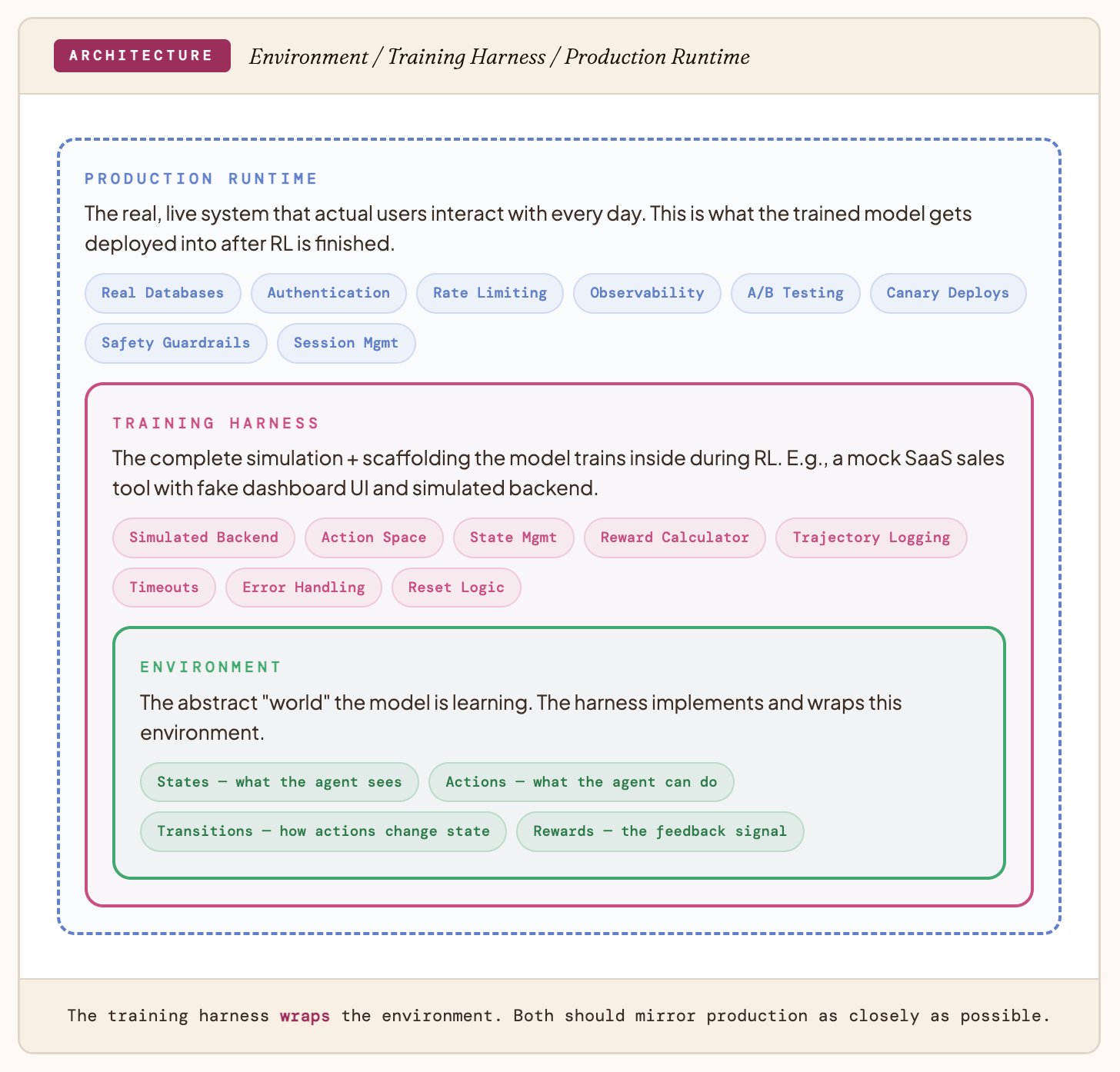
This article emphasizes the importance of RL environment quality for model training, noting that unstable environments (Harness) can generate “garbage data” that corrupts model training. The author lists common Harness errors like Stale Cache, Reward Hack, and False Resolution, and suggests adhering to traditional software engineering best practices to build more reliable RL environments.
AI is Reshaping the UI/Design Field ⭐ 8.5
Airbnb founder Brian Chesky plans to establish a new AI Lab focused on UI and design models. Concurrently, Cursor has released its Canvases feature, supporting in-browser UI tagging and modification, and Cursor 3 also introduced Design Mode. These developments indicate that AI’s application in the UI/design field is becoming increasingly deep and widespread.
AI News Daily Digest, June 5th ⭐ 6.5
The AI News Daily Digest compiles several AI-related news items from the day, including Anthropic’s research on recursive AI self-improvement, ChatGPT’s Dreaming V3 memory system, and AI website building features from Cursor and Codex, providing a quick overview of important AI developments.
AI News Daily Digest, June 5th ⭐ 6.5
This aggregated news digest provides a daily summary for June 5th in the AI field, covering Anthropic’s research on recursive AI self-improvement, ChatGPT Dreaming V3, and advancements in AI website building by Cursor and Codex. The digest compiles the day’s hot AI news for users to quickly grasp industry trends.
Social Media Buzz
Codex Interface So Complex It Requires Searching Settings ⭐ 9
A user pointed out that OpenAI Codex’s settings have become so numerous that searching is required to resolve issues, questioning whether a mature Agent’s interaction should be simpler, perhaps via voice commands for settings modification. OpenAI Codex’s release notes indicate the addition of a search settings feature to facilitate user lookup and customization.

AI Causes Programmer Divergence: Top Productivity vs. Elimination ⭐ 7.5
Regarding the impact of Agents on programmers, one viewpoint suggests that Agents will not replace all programmers but will double the productivity of top programmers while eliminating others. The article emphasizes the importance of collectivism (»>) and praises the miracle achieved by the Kimi Code team in one month.
Claude Puts Bugs in rsync? ⭐ 7
The maintainer community of the open-source project rsync is discussing potential bugs introduced by code written with the assistance of Claude AI. Analysis suggests that code introduced by Claude may cause performance issues (e.g., forced use of calloc) and has ignited debates about the quality of AI-assisted coding and its impact on open-source projects.
Three Bad Stories from the VC Industry ⭐ 6
This article shares three cautionary tales from the VC industry involving deception, exploitation, and mistrust. One story details a VC attempting to manipulate a founding team into acting against their own interests. These stories highlight the potential risks of working with VCs and how founders should navigate such situations.
OpenAI’s Mass Account Bans Alleged to Be Accidental ⭐ 6
OpenAI experienced an issue where some user accounts were mistakenly suspended. The company stated it is restoring access and addressing related subscription and credit issues. OpenAI described the incident as “accidental” and provided a status page link for users to track progress.
AI Decision Loop: Trapped in Indecision ⭐ 6
The article likens the “AI indecision” users experience during AI iteration to the “Buridan’s Ass” dilemma, where a decision cannot be made due to balanced inputs. The generality of AI allows users to constantly question and seek advice, prolonging the decision-making process and potentially leading to inaction. The author encourages users to make decisions at appropriate times to avoid endless loops.

A Company’s Programmers Write Programs That Write Code ⭐ 6
A brief tweet mentions “a company’s programmers are writing programs that write code,” leaving a blank space for users to fill in. This has sparked associations and discussions about the recursive nature and potential implications of AI writing AI code.