06-13-Daily - AI Hot Daily
AI Hot Daily 2026/6/13
Daily curated AI + indie dev news
Today’s Summary
Kimi's new model improves long-chain coding success rate.
OpenAI launches AI skills courses.
AI SDK 7 integrates multi-agent frameworks.
Claude Fable 5 is suitable for planning.
AI development outpaces human understanding.
Apple Siri launch delayed.
AI has not reshaped software engineering.
US public has mixed expectations and concerns about AI.
AI-generated frontend code needs improvement.
Examples of AI hallucinations.
TCS partners with Anthropic.
AI art can generate consistent characters.
AI news covers models and agents.
Claude Fable 5's routing classifier is imperfect.
AI First principle guides problem-solving.
AI popularization creates a tech gap.
TLDR AI news update.
AI chatbots are easily mistaken for conscious.
LLM programming code is unreliable.
Codex Token reset feature.
Clarifying concepts like AI Skills.
YouMind releases version 1.0.
AI-specific PRD document Prompt.
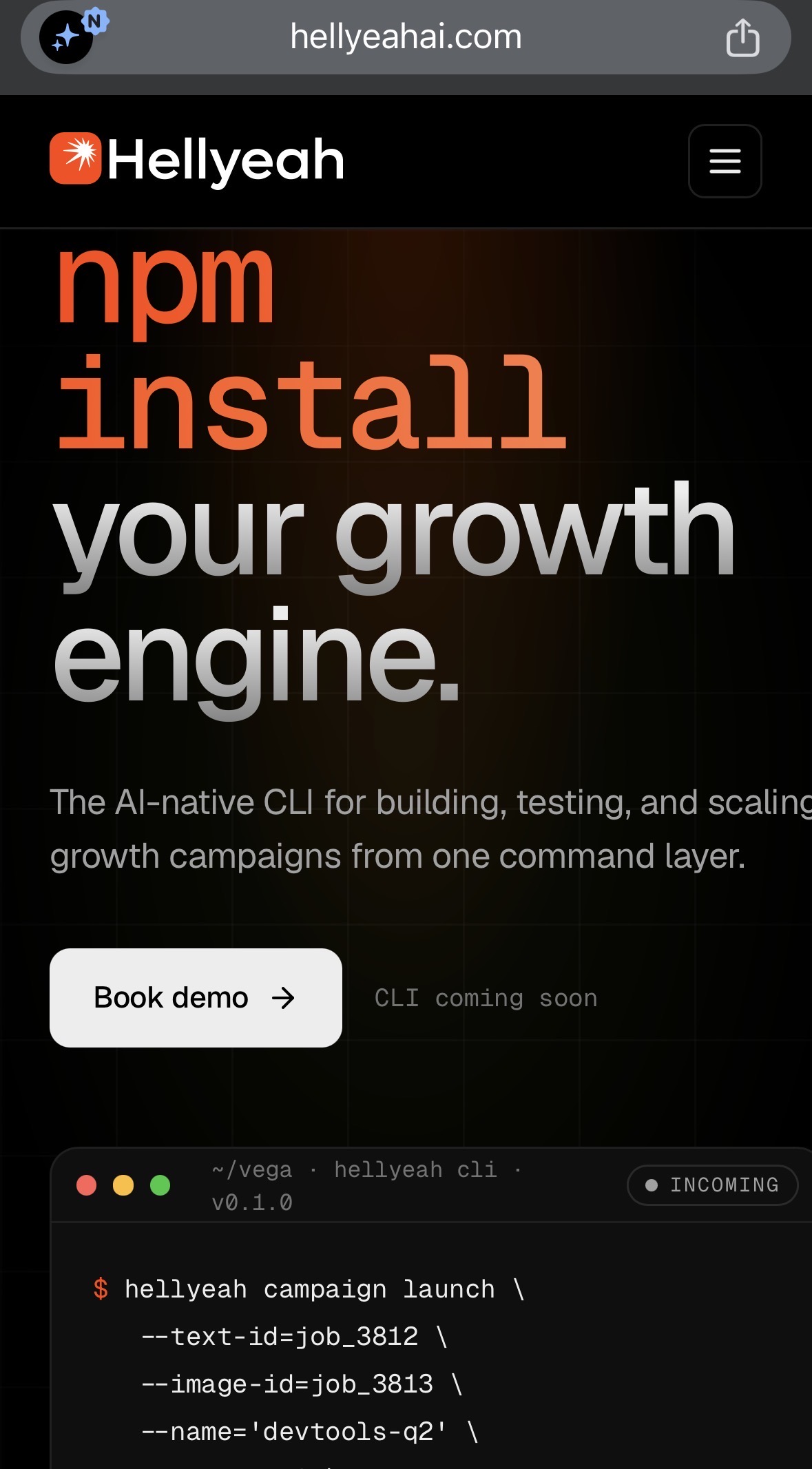
Hellyeah AI drives traffic growth.
Suggest developing high-demand tool sites.
Re-Ink automates reinsurance contracts.
LLM hallucination cases require careful verification.
AI frontend code quality can be improved.
LLM code quality is unstable.
Refuse to be a "reverse centaur."
Kimi model open-sourced.
WASI releases version 0.3.
AI Skills widen the capability gap.
AI company profitability models are questionable.
Startup flexibility beats large companies.
AI Agent PRD generation Prompt.
AI translation capabilities enhanced.
Focus on costs in the AI era.
AI interpretability research needs strengthening.
AI solves unsolved math problems.
AI popularization reveals a skills gap.
AI Technology & Products
Kimi Releases Kimi-K2.7-Code Model ⭐ 8.5
Kimi has released its latest coding model, Kimi-K2.7-Code, optimized from K2.6. It focuses on improving the success rate of long-chain coding tasks and reducing inference token consumption. The model enhances coding and agent performance while significantly lowering token usage, making it more beneficial for agents executing long tasks.

OpenAI Launches New AI Courses ⭐ 8
OpenAI has launched three new Academy courses designed to help people master practical AI skills, create repeatable workflows, and apply agents in their daily work. These courses were developed collaboratively by multiple OpenAI teams and will be updated as technology evolves.
AI SDK Supports HarnessAgent ⭐ 8
AI SDK 7 introduces HarnessAgent, providing a single API to run agent frameworks like Claude Code, Codex, and Pi. This allows developers to write agents once and easily switch between different agent frameworks in the future while maintaining compatibility with the AI SDK.
Claude Fable 5 User Manual ⭐ 8.5
One day after the release of Claude Fable 5, the community has summarized 8 consensus points and 3 pitfalls. The model is considered a highly autonomous, high-cost planning and orchestration model. It’s recommended for planning rather than execution, and its free usage window should be solidified as a “Skill.” Users should be mindful of its costs and potential safety fallbacks.

AI Advancing Faster Than Understanding ⭐ 7.5
Researchers warn that the pace of AI technology development has outstripped human understanding, particularly in explaining AI decision-making processes. Despite efforts in “explainable AI,” advanced AI systems remain “black boxes.” This widening gap in understanding could pose risks.
Preply Combines AI with Human Tutors ⭐ 7
Preply utilizes OpenAI technology to provide AI-generated lesson summaries and personalized feedback and practice for language learners. This demonstrates the potential of combining AI and human instructors to achieve personalized learning experiences.
Siri AI Delayed in EU ⭐ 7
Due to the EU’s Digital Markets Act (DMA) regulations, Apple’s Siri AI launch in iOS 27 and iPadOS 27 has been delayed. Apple believes the European Commission’s requirements pose significant risks to users, but the EC did not accept Apple’s proposed compromises.
AI Has Not Reshaped Software Engineering ⭐ 7
Some argue that AI has not reshaped software engineering but rather amplified its importance. The article suggests that while AI tools can assist development, core software engineering practices and value remain crucial.
Anthropic Releases Public Record Survey ⭐ 7
Anthropic has released the results of its first public record survey, showing that the US public’s hopes for AI are mainly focused on curing diseases and technological advancement, but concerns about job loss and cognitive dependence are also widespread. A majority support government regulation of AI and have low trust in AI companies.

AI-Generated Frontend Code Underperforms ⭐ 6.5
This article discusses the issue of “sloppiness” in AI-generated frontend code, particularly in UI design, and proposes attempts to reduce it. It mentions that using specific models and skills might yield better results, but overall quality still needs improvement.
AI Can Produce Hallucinations ⭐ 6.5
The article cites humorous examples of AI hallucinations, such as misinterpreting a Craigslist job posting as “Craigslist is trying to hire an AI expert to test its hiring process.” This again highlights the limitations of AI in understanding and information accuracy.
TCS Partners with Anthropic ⭐ 6.5
TCS is partnering with Anthropic to introduce Claude into regulated industries like finance and healthcare. TCS will provide Claude to 50,000 employees and build Claude-powered products for clients, aiming to improve accuracy and auditability in these sectors.

AI Art Generates Consistent Characters ⭐ 7.5
This post shares experiences using AI art to generate consistent character images, primarily by using a reference character image combined with text prompts. This is very useful for AI creations that require maintaining a unified character appearance.
AI News Daily ⭐ 7
Provides a summary of AI news for June 12, 2026, covering Kimi model updates, Claude Fable 5 usage strategies, and the application of AI agents in development.

Claude Fable 5 Debugging Issues ⭐ 7
When debugging issues related to network security, Docker Swarm, and traefik configuration, users found that Claude Fable 5 frequently switched to Opus 4.8, increasing debugging difficulty. This reflects the imperfection of the model’s routing classifier in practical applications.

Applying the “AI First” Principle ⭐ 7
This article emphasizes the “AI First” principle, which means attempting to solve problems with AI first. The author is experimenting with Codex’s Computer Use function to fill out Word contracts, demonstrating the potential application of AI in daily office scenarios.

AI Causing Anxiety for Non-AI Users ⭐ 7
The author found that showing AI results to friends outside the AI circle caused them anxiety, as the power of AI made them feel severely left behind and unsure how to start learning. This reflects the issue of the technology gap created by AI popularization.
TLDR AI News Digest ⭐ 7
This issue of TLDR AI News covers major headlines including OpenAI’s acquisition of Ona, Anthropic’s strategic adjustments, and Xiaomi’s MiMo code model.
AI Chatbots May Seem Conscious ⭐ 6
This article explores why AI chatbots (like Claude) can give people the illusion of consciousness, even though most experts believe they are not truly conscious. This stems from the learning patterns and programming of LLMs, which easily lead people to interpret their behavior as “inner experience.”

Distrust in AI-Generated Code ⭐ 6
The author cannot fully embrace LLMs for programming due to the unreliability of AI-generated code. Although AI increases code generation speed, the time spent manually checking and fixing errors negates the efficiency gains, making it untrustworthy like mature library functions.
GPT Token Usage Reset Mechanism ⭐ 6
OpenAI has introduced a Token usage reset feature for Codex. Users can get additional Token usage opportunities by inviting friends or resetting themselves. A demonstration video is provided.
Classification and Usage of AI Agents ⭐ 6
This article aims to clarify concepts such as AI Skills, Projects, Custom GPTs, Agents, Plugins, etc., helping users understand the differences and applicable scenarios. The goal is to enable users to clearly decide which tool to use when customizing workflows.

Indie Development & SaaS
YouMind Releases Version 1.0 ⭐ 8
YouMind has released version 1.0. This product, developed by former senior executives from major domestic tech companies, focuses on collection, creation, typesetting, and knowledge management for the overseas market. The product details are rich, and the user experience is good.
PRD Document Generation Prompt for AI Agents ⭐ 8.5
To adapt to AI agent development, the author has released a PRD document generation prompt specifically for AI. Documents generated using this prompt ensure completeness and richness in AI development.

Hellyeah AI Product Launch ⭐ 8
The team has launched a new product, Hellyeah AI, for driving growth through traffic acquisition for older products. The product simplifies the learning of traffic acquisition knowledge through CLI UI operations, improving user experience and conversion rates.
AI-Driven Tool Sites ⭐ 7.5
For users unsure how to apply large models, the article suggests trying to develop high-demand tool sites. Replicating existing well-known tools with AI capabilities and combining them with personal insights is a relatively achievable business model suitable for earning advertising revenue.

Re-Ink: Intelligent Processing of Reinsurance Contracts ⭐ 8.5
The Re-Ink project, winner of the Financial AI Hackathon, utilizes LandingAI’s Agentic Document Extraction technology to automate the processing of reinsurance contracts. It converts PDF/DOCX documents into auditable contract records, addressing pain points in document processing in this field.

AI LLM Hallucination Issues ⭐ 7.5
This article uses specific examples to illustrate the hallucination problem of LLMs, such as misinterpreting job postings as hiring AI experts. This reminds developers and users that AI outputs require careful verification, especially in scenarios involving critical decisions.
AI-Assisted Frontend Development ⭐ 6.5
This article discusses the quality issues of AI-generated frontend code, suggesting that AI-generated code may not be “refined” enough. It offers some suggestions for improving results through specific skills and models, providing valuable insights for indie developers and SaaS product developers.
Limitations of LLMs in Programming ⭐ 6
The author believes that the quality of code generated by LLMs is unstable and requires extensive manual checking and fixing, which negates the advantage of generation speed, making it unreliable for use like mature libraries. Developers relying on AI to improve development efficiency should consider this carefully.
Don’t Be a “Reverse Centaur” ⭐ 6
The author refuses to be a “reverse centaur,” forced to spend a lot of time reviewing AI-generated code. He maintains a stance of not using LLMs to write code, emphasizing that even as AI becomes popular in the open-source community, one should stick to their own technical judgment and avoid passive acceptance.
Open Source Projects
Kimi-K2.7-Code Model Open-Sourced ⭐ 8.5
Kimi has released its latest coding model, Kimi-K2.7-Code, and open-sourced it on Hugging Face. This model is optimized for coding agents, improving the success rate of long-chain coding tasks and reducing inference token consumption, providing developers with more efficient AI coding tools.
WASI Version 0.3 Released ⭐ 7
WASI has released version 0.3, adding new API interfaces. Community discussions reveal concerns about its component model and development process, deeming it too complex and lacking transparency, with a preference for simpler APIs or custom integrations.
Industry News
Analysis of AI Skills Ecosystem ⭐ 9
This article delves into the value and design philosophy of AI Skills, pointing out that agents are not just simple chat interfaces but key enablers that amplify capability gaps. It also explains the principles of designing, maintaining, and distributing good skills, emphasizing the importance of ecosystem building.

AI Economy and Valuation Bubble ⭐ 7
The article suggests that the profitability models of AI companies like OpenAI and Anthropic are questionable, with high operating costs and uncertain revenue prospects indicating a potential bubble. High capital investment and reliance on “recursive self-improvement” suggest a possible lack of sustainable business models in the industry.
Alibaba’s High-Level Changes Spark Reflection ⭐ 7
Recent high-level changes at Alibaba have sparked discussions about the competitiveness of startups. The author believes that compared to internal “political struggles” in large companies, startups’ flexibility and focus are their unique advantages.
Social Media Buzz
Differences in PRD for AI Agent Development ⭐ 8.5
The article points out that PRD documents preferred by humans differ from those preferred by AI agents. The author has developed a specific PRD generation prompt tailored for AI to improve the accuracy and efficiency of AI development.
AI’s Impact on the Translation Industry ⭐ 7
The discussion suggests that AI’s translation capabilities are increasingly strong, potentially reducing the workload for human translators and shifting their roles more towards review. However, the quality and tone of AI translations may still not match human translators, especially in literary translation.
The Issue of “Effort” in the AI Era ⭐ 7
This article explores how much effort humans need to exert to gain attention in the AI era. Through personal and colleagues’ experiences, the author illustrates that AI-generated content may be overlooked due to a lack of “human touch” and emphasizes the human cost of reviewing AI content.
AI Progress Faster Than Understanding ⭐ 6
Researchers warn that the pace of AI development exceeds human understanding, potentially exacerbating “black box” issues. AI is rapidly advancing in understanding humans, and this asymmetry increases risks, calling for strengthened research into AI interpretability.
“Why Don’t You Just Upload It to ChatGPT?” ⭐ 7
Users discuss the application of AI in various fields, particularly in translation and mathematical problems. AI has reached near-human levels in translation and has even solved unsolved problems in mathematics, prompting reflection on the boundaries between AI and human intelligence.
“Isn’t There Anything AI Can Do?” ⭐ 7
The article points out that the popularization of AI makes many people outside the AI circle feel “left behind” and anxious, unsure how to start learning. This highlights the challenges of information opacity and skill gaps during the widespread adoption of AI.