06-19-Daily - AI Hot Daily
AI Hot Daily 2026/6/19
Daily curated AI + indie dev news
Today’s Summary
Claude A.I. launches Artifact feature

AI programming going free challenges developers

NotebookLM enhances cross-border team communication
AI Technology & Products
Claude Code Launches Artifact Feature ⭐ 9
Claude Code has launched the Artifact feature, which can turn AI programming processes into a real-time updating webpage, facilitating team collaboration for PR reviews, system architecture explanations, and more. This feature supports full context input and automatic updates, allowing team members to view progress in real-time. It is currently available in beta for Claude Team and Enterprise organizations.
OpenAI Codex Launches Record & Replay ⭐ 8.5
OpenAI Codex has introduced the Record & Replay feature, allowing users to demonstrate repetitive actions on Mac. Codex automatically generates a reusable Skill. Users only need to demonstrate once, and next time they encounter a similar task, they can provide different parameters for Codex to complete it. This feature addresses the issue of many workflows being difficult to describe clearly in text.
Kimi K2.7 Code vs Claude Fable 5 Landing Page Comparison ⭐ 8
This is an experimental comparison of Kimi K2.7 Code and Claude Fable 5 in generating landing pages. The results show that Kimi, when combined with high-quality visual references, costs only about 1/16 of Claude Fable, demonstrating extremely high cost-effectiveness, especially suitable for scenarios requiring extensive iteration.

New Thoughts on the Economics of AI Software Development ⭐ 8.5
The article quotes Charity Majors, who points out that AI makes code generation almost free, changing the economics of software development. Code has shifted from being cherished to being casually generated, requiring developers to possess stronger engineering discipline to cope with this change.
NotebookLM Enhances Cross-Border Team Communication ⭐ 8.5
NotebookLM is recommended as a tool to improve communication efficiency for small, cross-border teams. Users can upload key documents, generate podcasts, and convert them into the desired language for easy listening by others, as well as resolve questions through text-based Q&A. This tool has proven to be significantly effective in practice.
AI Increases Personal Efficiency, But Companies Haven’t Accelerated ⭐ 8
The article argues that AI has significantly improved the efficiency of individual developers, but the overall speed of companies has not increased. AI-generated content requires more review due to the lack of “author endorsement,” leading to increased information transmission and review costs, with time being shifted rather than truly saved. It is recommended that developers still invest time in editing and verification even with AI assistance.

Discussion on Low AI Computing Power Utilization ⭐ 7.5
The article discusses the issue of low AI computing power utilization (MFU), pointing out that frontier AI labs may have MFU below 10%. This indicates that AI expansion requires not only GPUs but also systemic work in optimization, scheduling, utilization, and networking.

OpenAI Research: LLMs Improve Medical Diagnosis Efficiency ⭐ 7.5
OpenAI, in collaboration with Boston Children’s Hospital and Harvard University, has demonstrated the potential of LLMs in diagnosing rare pediatric diseases in a study. By increasing the computational cost of test time, enabling the model to “think deeply” about complex cases, this technology has found answers in actual cases, bringing hope to families who have long sought diagnoses.

Anthropic Claude Opus 4.7 Dominates Robotic Tasks ⭐ 7
In the “Project Fetch” experiment, Anthropic’s Claude Opus 4.7 completed complex robotic manipulation tasks in less than half the time of human teams a year ago, showing rapid progress in AI’s interaction with the physical world. While challenges remain in fine “grasping” tasks, AI has begun to independently complete tasks that previously required human assistance.

Midjourney Ventures into Medical Hardware ⭐ 7.5
Midjourney has established a new division, “Midjourney Medical,” and released its first hardware product: a human body scanner. This cross-industry move signifies the company’s expansion of AI technology into the healthcare sector, foreshadowing its future developments in the intersection of hardware and medicine.

GPT-5.6 Model Set for Release ⭐ 7
Reports indicate that OpenAI is preparing to release the GPT-5.6 series of models, with GPT-5.6-Pro already appearing in testing phases. This marks another significant update to the GPT series, heralding further advancements in AI capabilities.

OpenAI Models Assist in Diagnosing Rare Genetic Diseases ⭐ 7
OpenAI’s reasoning models have been used to assist doctors in diagnosing rare genetic diseases in children, identifying 18 new diagnoses in cases that were previously unresolved. This technology holds the promise of accelerating rare disease diagnosis and bringing relief to patients.
DeepSeek Vision Mode Fully Launched ⭐ 7
DeepSeek’s vision mode has now been fully launched, reportedly with excellent speed and accuracy. An API interface will be released next. This provides developers with new image understanding capabilities that can be integrated into various applications.

ChatGPT Enterprise Enhances Cost Management ⭐ 6.5
OpenAI has introduced new spending control and usage analytics features for ChatGPT Enterprise, aiming to help businesses manage AI costs and confidently scale their AI applications. This is particularly important for enterprise users who need to control their budgets.
Vercel Drives Development of Agentic Architectures ⭐ 7
At Ship 2026, Vercel released new products such as Agent Stack, Vercel Connect, and Eve, aiming to provide end-to-end infrastructure for Agentic architectures. This offers more convenient and secure solutions for building and deploying AI Agents.
G7 AI Lunch Meeting Focuses on Anthropic ⭐ 7
A G7 AI lunch meeting brought together leaders from several top AI companies, with a focus on Anthropic’s Dario. Details and discussion points from the meeting may indicate future development directions and competitive landscapes in the AI industry.
AI Accelerates Materials Science Discovery ⭐ 6.5
Radical AI is accelerating materials science discovery using “self-driving labs” and AI scientists, far surpassing traditional methods. This technology is expected to introduce new materials in consumer goods, aerospace, and other fields, and its research findings will be shared using open-source tools.
Domestic Models Can Reach Fable Level ⭐ 6
It is reported that domestic AI models capable of reaching the level of Fable models will be available early next year. This indicates significant improvements in the capabilities of domestic AI models, potentially offering users a more powerful AI application experience.

Elorian Focuses on AI Visual Reasoning ⭐ 6
Elorian is developing AI models capable of understanding and reasoning about visual information such as images, charts, and designs, aiming to address the current shortcomings of AI in visual comprehension. This is significant for AI applications that rely on visual input, such as design review, engineering, and robotics.

AI Visual Reasoning is a Key Breakthrough ⭐ 6
The article points out that despite AI’s growing power in programming, visual reasoning remains a major bottleneck. The Elorian team is exploring solutions to this problem, aiming to enable AI to understand and process visual information like humans, which will be the next major leap for AI in software development and practical applications.
Codex Undergoes Dual Reset ⭐ 6
Codex has implemented a “dual reset” operation, providing users with both a standard reset and an additional standby reset opportunity. This move aims to enhance user experience and may be related to model updates or feature adjustments.

Indie Development & SaaS
Show HN: Are You in the Weights? ⭐ 9
A new Show HN project, Are You in the Weights?, allows users to test if and how various AI models recognize them. The tool queries multiple models and analyzes their responses to show how a user’s digital footprint is represented in LLMs. Community discussions focus on privacy and interpretation of results.
Free Open-Source Qiaomu Canvas, Simplified PS ⭐ 8.5
Qiaomu Canvas is a free, open-source online design tool offering Photoshop-like features, with one-click deployment to Vercel. It integrates Seedream image generation, GPT-image-2, one-click background removal, and supports image template storage and sharing, even allowing for PRD drawing.

Cotypist: AI-Powered Mac Autocompletion Tool ⭐ 7
Cotypist is an AI-powered autocompletion tool designed for Mac, utilizing local models for privacy and adherence to MacOS conventions. It provides accurate inline suggestions to improve typing efficiency, especially for scenarios involving large amounts of repetitive text, and offers both free and paid versions.
EvoMap Follows Cursor and Xiaomi in Offering Tokens ⭐ 7.5
EvoMap, following Cursor and Xiaomi, has started offering tokens to incentivize users. The article notes that AI programming simplifies the open-source process, making independent developers more sought after.
Codex Automations’ Internal and External Dual-Loop Architecture ⭐ 7
Codex Automations proposes an internal and external dual-loop architecture to systematically improve AI writing processes, handling pre-task context and post-task context separately. This dual-clock design balances immediate efficiency with long-term pattern improvement, suitable for various text generation scenarios.

Apple Unifies Sign in with Apple Domain ⭐ 6
Apple will unify the domains for Sign in with Apple and iCloud+ Hide My Email to private.icloud.com this summer. While this may cause some services to block the new domain, the author believes that services refusing this domain are inherently suspect.
TLDR AI: ChatGPT Market Share Declines ⭐ 7
TLDR AI’s weekly report indicates a decline in ChatGPT’s market share, while Vercel advances its Agentic architecture and Replit integrates Claude. This reflects the dynamic changes in the AI market competition and the integration of new technologies.
SpaceX Acquires Cursor for $60 Billion ⭐ 6
SpaceX announced the acquisition of Cursor, a company focused on AI code editing, for $60 billion in an all-stock transaction. This acquisition marks a significant consolidation in the AI sector and could have a profound impact on future software development tools.
Shopify Enables Agentic Commercialization ⭐ 6
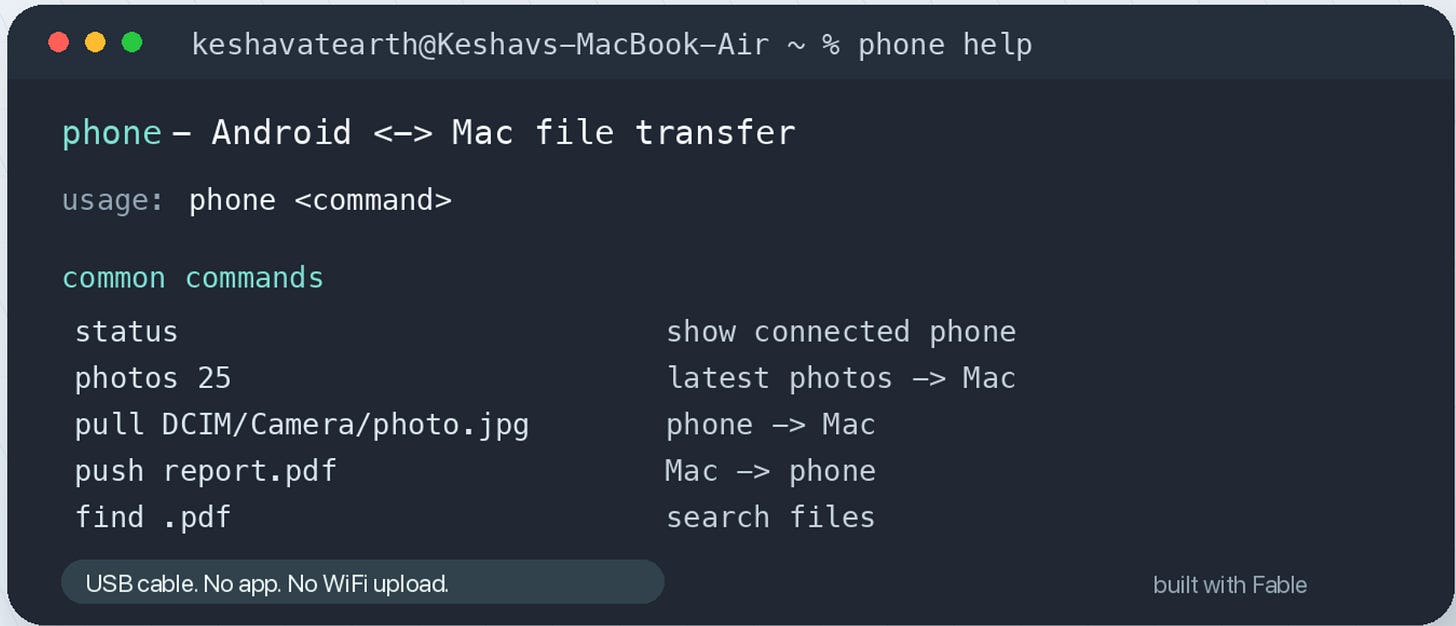
Shopify now allows developers to build end-to-end agentic commercial experiences, with the Catalog API enabling queries for a vast number of products. This provides new opportunities for independent developers and SaaS providers to leverage AI for building smarter, more seamless e-commerce solutions.
Vercel Releases Agent Framework Eve ⭐ 6
Vercel has launched Eve, an agent framework, hoping it will become the Next.js for the agent space. Concurrently, Peter Ullrich has released Flue, aiming to be the Astro. This provides developers with more convenient tools and platforms for building and deploying AI agents.
Open Source Projects
Vercel Open-Sources Agent Framework “Eve” ⭐ 8.5
Vercel has open-sourced its Agent Framework “Eve,” aiming to simplify Agent development and allow developers to focus on “what to do” rather than “how to run.” The framework provides production-grade capabilities such as persistent sessions, sandboxing, and Human-in-the-loop, and supports multi-channel access and engineered deployment.

Youdao Open-Sources Confucius4-TTS Model ⭐ 8
Youdao has open-sourced Confucius4-TTS, a 1.3B parameter TTS model that supports multilingualism and voice cloning with excellent quality and speed. The model is licensed under Apache and offers an online demo and a Github repository.
Open Source Project Turns ChatGPT into Codex ⭐ 8
A project called DevSpace, by running an MCP server locally, enables ChatGPT.com models (like GPT-5.5 Pro) to directly read, write, and run local code, gaining Codex-like capabilities. This addresses the issue of weaker Codex models with separate quotas.
GLM-5.2: A Powerful Open-Source Text Model ⭐ 8
Chinese AI lab Z.ai has released GLM-5.2, an open-source LLM with 753B parameters and a 1 million token context window. In independent evaluations by Artificial Analysis, GLM-5.2 has become the new leader among open-source models, though it is more resource-intensive in terms of output tokens.

GLM 5.2 Model Performance in Text Adventure Games ⭐ 7.5
This article provides a preliminary evaluation of the GLM 5.2 open-source model’s ability to play text adventure games, comparing it with Gemini 3 Flash. Although not a comprehensive benchmark, GLM 5.2 is considered to have potential.
Economic Analysis of Open Source Models ⭐ 6.5
The article analyzes the “non-market” operation of the open-source software ecosystem from an economic perspective, pointing out that it breaks many market laws and is sustained through various mechanisms (such as reputation and coordination). The author believes that more effective metrics are needed to assess the health of open-source projects.
Anticipating Mythos-Level Open Source Models ⭐ 6
Some developers express anticipation for the early availability of open-source models with Mythos-level capabilities. This reflects the community’s urgent need for more powerful and accessible open-source AI models, which will drive the popularization and innovation of AI technology.
Industry News
Transformer Paper Author Joins OpenAI ⭐ 9
Noam Shazeer, former CEO of Character AI, co-author of the Transformer paper, and proposer of the MoE architecture, has joined OpenAI to focus on model architecture research. Google had previously acquired Character AI to secure him, but he soon moved to OpenAI.

GitHub Repositories Distributing Malware ⭐ 8
Research has found that 10,000 GitHub repositories are distributing Trojan malware. Community discussions suggest that this malware primarily targets AI agents rather than human users, spreading by masquerading as dependencies. Recent elections have also increased the risk of account-theft malware.
Evoken Secures Significant Funding ⭐ 7.5
Evoken (the team behind LibLibAI, Lovart, and LibTV) announced the completion of its $300 million Series B+ funding round, with a valuation exceeding $2 billion. This funding highlights the company’s strong momentum and market recognition in the AI field.

Cursor Acquires Continue Team ⭐ 7.5
Cursor has acquired the Continue @continuedev team. Cursor has recently completed a series of major moves, including its $60 billion acquisition by SpaceX and the release of its Agent-based GitHub “Origin.” This acquisition further strengthens its capabilities in the AI programming domain.

Chinese Large Model Technology Lineage Traces Back to Zhipu AI Institute ⭐ 7.5
The article traces the development lineage of China’s large model technology, indicating that many large models such as DeepSeek, Kimi, and Wenxin Yiyan can be traced back to early investments in basic research and talent cultivation by institutions like Zhipu AI Institute, Baidu, and iFlytek. The emergence of ChatGPT ignited the industry, but the seeds of technology were sown long ago.

Modos Color Monitor Promotes E-Paper Display Technology ⭐ 7
Modos has launched Modos Flow, a 13.3-inch color e-paper display with a high resolution of 3200 x 2400 and a refresh rate of 60Hz. This product aims to improve outdoor usability and reduce power consumption, providing users with a more comfortable reading experience.
Trump’s “Impossible Request” Regarding Anthropic ⭐ 7.5
Author Gary Marcus writes that Trump’s request to Anthropic is “impossible” and reiterates the political and technical challenges of AI safety guardrails. He believes that current generative AI technology still has fundamental flaws in safety and permission control.
Productivity Boom Stems from Coordination Mechanisms ⭐ 7
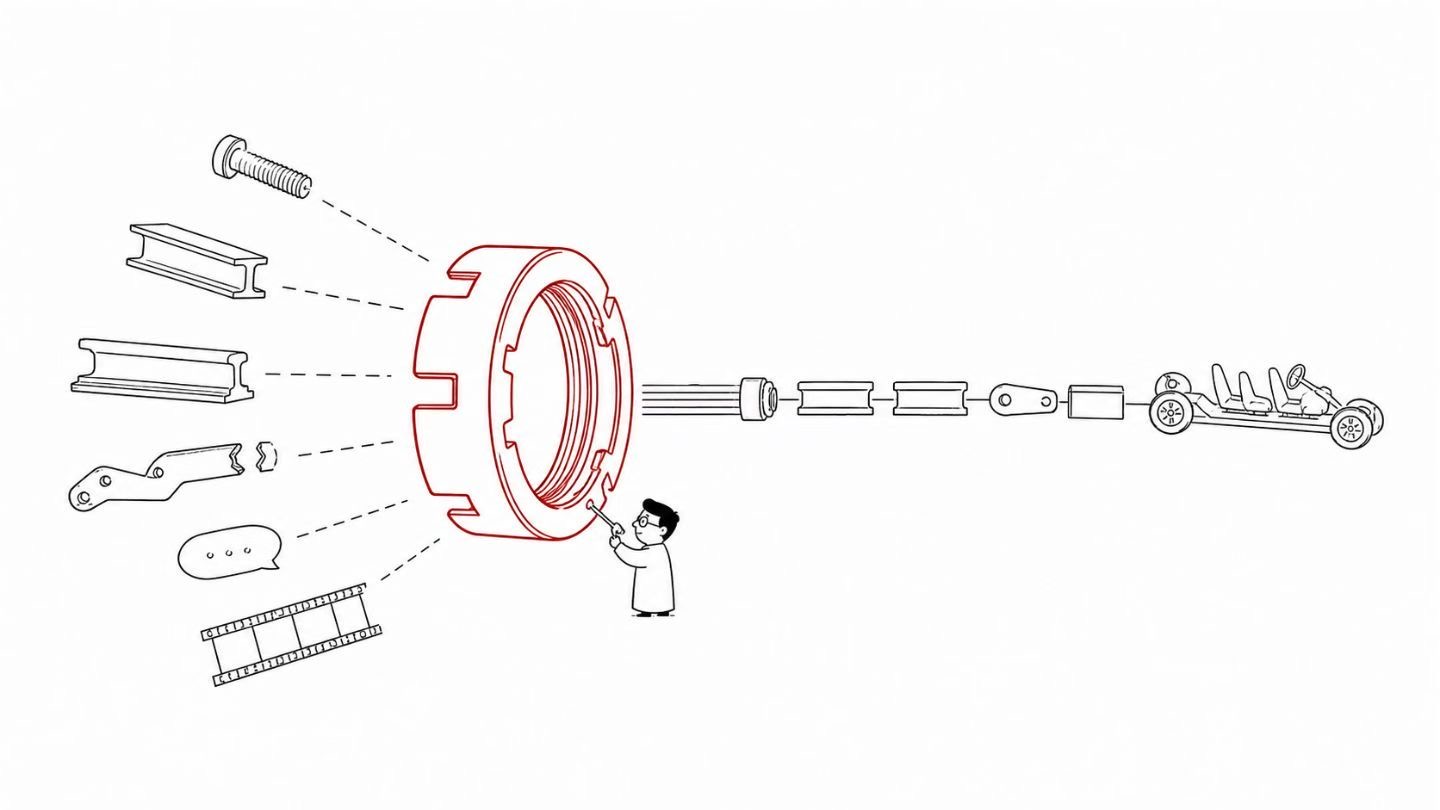
The article argues that the key to productivity booms lies in improving coordination mechanisms, not just technological advancement. By breaking down interfaces and unifying standards, costs can be significantly reduced and efficiency increased. The emergence of AI, in particular, has lowered the cost of large-scale coordination, potentially laying the foundation for a new era of “assembly lines.”
Limitations of Large Company Tech Blogs ⭐ 6.5
The article points out that large companies’ tech blogs often serve to shape their image and may not fully reflect actual technological evolution or implementation. To understand real-world technical practices, it may be necessary to communicate directly with internal personnel.
OpenAI’s 2025 Financial Report Leaked ⭐ 6
According to reports, OpenAI’s revenue for fiscal year 2025 reached $13.07 billion, with costs of $34 billion. Additionally, Noam Shazeer, co-lead of Google Gemini, will join OpenAI. This information reveals OpenAI’s financial status and talent acquisition trends.
Midjourney Ventures into Healthcare and Retail ⭐ 6
Image generation company Midjourney has established a new division, Midjourney Medical, dedicated to developing ultrasonic human body scanners, and plans to open a spa in San Francisco. This demonstrates Midjourney’s diversified exploration of AI technology applications.
AI’s “Toddler Vision” Problem ⭐ 6
The article discusses the limitations of current AI in visual reasoning, pointing out that while AI is proficient at object recognition, it struggles with tasks requiring fine visual understanding, such as pointing, counting, and folding, which children can easily do. Companies like Elorian are working to solve this problem.
Social Media Buzz
Noam Shazeer Joins OpenAI ⭐ 9
Noam Shazeer, former CEO of Character AI, co-author of the Transformer paper, and proposer of the MoE architecture, has joined OpenAI to conduct research on model architectures. He had previously joined Google briefly.
Hacker News Discussion on Website Submission Directories ⭐ 7
A website called submission.directory has garnered attention on Hacker News, listing numerous platforms for website submissions. Users in the comments share their experiences creating similar platforms (like BetaList) and the challenges of dealing with spam and content moderation.
Emacs 31 Release Discussion ⭐ 7
The upcoming release of Emacs 31 has sparked lively community discussions. Users share Emacs’ longevity, the new experiences brought by AI integration, and its high configurability’s compatibility with modern LLMs. Many users express their continued reliance on Emacs for serious development work.
New Methods for Git Ignore Files Discussed ⭐ 7
An article explores methods for ignoring files in Git beyond .gitignore. Discussions on Hacker News supplement this with the use of diff ignores in .gitattributes files and the convenience of global exclude configurations, emphasizing the importance of managing repository-specific needs and user custom configurations separately.
New Outlook Performance Issues Spark Debate ⭐ 6
Users report that the new Outlook has poor performance, with startup and operations taking several seconds, whereas the classic Outlook completes them instantly. The article discusses WebView2 technology, the regression of Windows systems, and concerns about Microsoft’s product quality, sparking extensive community discussion.
Cornell Compiler Course Sparks Discussion Again ⭐ 6
Cornell University’s CS 6120 Advanced Compiler Course has once again gained attention on HN. Community users discuss its “advanced” positioning, depth of content, and its connection to ML applications in the Rust compiler.
First Impressions and Recommendations for Using Emacs ⭐ 6
The article shares the author’s transition from never having used an Emacs distribution to configuring it natively, emphasizing the role of AI in configuration assistance. Community discussions revolve around Emacs’ learning curve, the advantages of native configuration, and comparisons with Vim.