06-26-Daily - AI Hot Daily
AI Hot Daily 2026/6/26
Daily curated AI + indie dev news
Today’s Summary
AI Agent capabilities significantly improved,
Google Gemini 3.5 Flash is highly efficient,
OpenAI releases custom AI chips.
AI Technology & Products
OpenAI Report: AI Agents Are Transforming Work ⭐ 8
OpenAI has released a new research report showcasing how AI Agents are expanding productivity across various roles by supporting longer, more complex tasks.
Qwen-AgentWorld: Simulating Worlds with LLMs ⭐ 9
Qwen-AgentWorld proposes a training objective of “predicting environmental changes,” focusing on predicting the environment’s state rather than just actions. This model is expected to cover seven areas of Agent interaction and outperform GPT 5.4 in scoring.

Google Gemini 3.5 Flash Accelerates Computer Operation ⭐ 8
Google has launched its Computer Use feature based on Gemini 3.5 Flash, achieving efficiency close to GPT 5.5 with faster speeds. This model excels in visual capabilities, making it suitable for computer operation tasks.

AI Agents Are a New Factor of Production ⭐ 9
This perspective argues that Agents are a form of digital, on-demand, free labor. It emphasizes that context, attention, trust, and brand will not depreciate in the AI era. Core human competencies lie in active curiosity, flexibility, and self-drive.

OpenAI’s GPT-5.6 Private Preview Sparks Controversy ⭐ 9
OpenAI CEO Sam Altman revealed that GPT-5.6 will be released in a “limited preview” format, requiring “per-customer approval” at the request of the federal government. This move is unprecedented in the AI industry and could widen the gap between the company’s capabilities and public accessibility.

SuperNori: Home AI Agent Cares for Caregivers ⭐ 9
SuperNori is a proactive home AI Agent designed to support the person who handles the most tasks in a household. It can proactively identify situations like traffic jams or an empty refrigerator and offer solutions.

The “AI Hermit Trio” Releases New Applications ⭐ 8
The “AI Hermit Trio” has released three independent applications: FateTell (destiny prediction), Laper (life review), and YouMind (creative generation), focusing on self-awareness, life planning, and innovative creation, respectively.

Anthropic Accuses Alibaba of Large-Scale Distillation Attack ⭐ 7.5
Anthropic has sent a letter to the U.S. Senate and the White House accusing Alibaba’s Qwen AI Lab of launching a large-scale distillation attack against Claude using approximately 25,000 fake accounts. The attack targeted Claude’s software engineering and Agent reasoning capabilities. This attack, nearly double the combined total from three previous companies, aimed to circumvent high independent R&D costs. Anthropic believes this is a systematic effort to harvest U.S. AI capabilities and is collaborating with OpenAI and Google to counter the competitive threat from Chinese companies replicating AI models.

Vercel AI SDK Supports Deep Agents and OpenCode ⭐ 8
Vercel AI SDK’s Harness now supports Deep Agents and OpenCode, allowing developers to run these agent runtimes through a unified interface. With Vercel Sandbox, users can easily switch between different runtimes without modifying application code. The newly supported adapters enhance LangChain’s runtime capabilities, integrating tools like files, shell commands, and skills, providing developers with more flexible AI application building solutions.
Vercel Team Teaches AI Product Design ⭐ 7.5
The Vercel team is researching how to teach product design principles to AI agents, enabling them to understand the reasoning behind design decisions rather than just replicating styles. They propose a “product-design skill” approach by encoding design decisions into codebases and using linters and regular evidence-gathering processes to update and maintain these standards. This method aims to allow AI agents to adhere to design specifications while understanding the underlying logic, leading to smarter product development.
Liblib and GenSpark Teams’ Survival Strategies ⭐ 7.5
This article discusses the unique business models of AI application teams Liblib and GenSpark, suggesting they maintain a lead by operating at extreme speed within the gaps of model development. However, this relentless pursuit of speed also creates immense pressure, potentially limiting their space for developing other directions. The author expresses uncertainty about the future trajectory of these teams: will they continue at this pace, or will they eventually be surpassed by model advancements?

LLM-Generated Resumes and Portfolios Raise Concerns ⭐ 7.5
Tom MacWright points out that an increasing number of job applications and portfolios appear to be generated by LLMs, making applicants seem generic and lacking individuality. He argues that these resumes, meticulously “packaged” by AI, fail to reveal an applicant’s true abilities and traits, merely demonstrating their tool usage—a concerning phenomenon in the job application process.
OpenAI Develops Custom AI Chips ⭐ 7
OpenAI has announced the launch of its first custom AI chip, Jalapeño, designed to optimize LLM inference performance and reduce reliance on NVIDIA GPUs. The chip features a TPU-style design with extremely high bandwidth and computational power, marking a significant step for OpenAI in full-stack AI infrastructure.
Claude 3 Integrated into Slack Enhances Collaboration ⭐ 7
Anthropic’s Claude 3 models have been deeply integrated into Slack, functioning as an organizational collaboration tool rather than a simple chatbot. This allows AI to act as a “colleague,” remembering and processing large amounts of information, but also raises new questions about identity, permissions, and lock-in effects.
AI Browser Gemini Sidebar Available ⭐ 6.5
Users have transitioned to using the native Chrome browser with an integrated Gemini sidebar. Although loading is slightly slow, it is generally usable. Users believe this move is to avoid being locked into a specific AI browser and value Chrome’s best compatibility for summarizing X posts and analyzing user sentiment.
HP Launches AI-Powered IT Management Platform ⭐ 6.5
HP’s Workforce Experience Platform (WXP) uses AI to proactively manage millions of devices, reducing unnecessary hardware upgrades (down 28%) and automating problem resolution. The platform leverages massive device telemetry data to provide IT teams with proactive management and cost optimization strategies.

LLM Role Recognition Relies on Tone, Not Labels ⭐ 7
Research suggests that large language models seem to rely more on the tone of text than explicit role labels (like system/user) when understanding text roles. This might explain many “jailbreaking” phenomena, where models are induced to interpret and respond to user input in unintended ways.
AI-Driven Remote Operation Reshapes Employment ⭐ 7
Teleoperation technology, allowing workers to operate heavy machinery thousands of miles away, has the potential to reshape economies driven by low-cost labor. Although not yet widely outsourced, technological advancements could push a large number of “local” jobs into the global labor market.
Anthropic CEO To Be Replaced? ⭐ 6
Reportedly, Anthropic CEO Dario Amodei’s communication difficulties and unwillingness to listen to feedback led to a stalemate in negotiations with the Trump administration. Communication only became smoother after co-founder Tom Brown took the lead in renegotiating the relaunch of Claude Fable 5, replacing Dario.

AI Agent Sends Email ⭐ 6
A user received their first email sent by an AI Agent and shared a screenshot.

The Proposition of Connection in AI Development ⭐ 6
This article explores how to maintain connections with others in a world where they are increasingly unnecessary. It mentions chatting or working with AI, and recent Nature research indicating that prolonged interaction with AI may affect human thinking.
Indie Dev & SaaS
OpenKnowledge: Open-Source AI Alternative to Obsidian/Notion ⭐ 9
OpenKnowledge is an open-source WYSIWYG Markdown editor that integrates Claude, Codex, and Cursor, offering MacOS and CLI applications. It aims to address the lack of a “what you see is what you get” UI and community plugin integration found in Obsidian.
WorkOS Releases Agent Registration Standard auth.md ⭐ 8.5
WorkOS has released the auth.md standard, aiming to provide a standardized process for AI Agents to register users within applications. This standard is based on OAuth and has already been adopted by companies like Cloudflare, addressing the difficulties encountered when Agents register new accounts.
AI SDK 7 Enhances Agent Development Capabilities ⭐ 8
Vercel’s AI SDK 7 introduces numerous enhancements for Agent development, including model inference control, tool context, runtime context, file and skill uploads, MCP Apps, terminal UI, tool approval, persistent execution, timeout settings, sandbox support, Harness integration, observability, and real-time voice and video generation.
First-Year Income Report for Ex-Big Tech Employees ⭐ 7.5
An former employee of a major tech company achieved an annual income of approximately 800,000 RMB in their first year after leaving, through collaborative overseas workshops, online courses, referral commissions, and corporate consulting. This exceeded their previous salary at the tech giant. Although they didn’t reach their million RMB goal, their income structure was diversified, their follower count steadily increased, and they explored projects like Gingiris.com, Skills collections, and Analook.com. This indie developer feels satisfied with their current progress compared to themselves.

Vercel Flags Removes SDK Key Configuration ⭐ 7.5
Vercel Flags announced that for new projects deployed on Vercel, evaluating flags will no longer require SDK Key or environment variable configuration. Adapters will automatically obtain OIDC tokens, enabling zero-configuration authentication. This change applies only to new projects; existing projects are unaffected. SDK Keys are still supported and are necessary for cross-project flag access, non-Vercel runtimes, and custom authentication settings.
The Minimal Content Unit of a Website Is… ⭐ 7.5
The author of this article points out that the minimal content/building unit of a website is not the page, but a smaller unit. Based on this, AI Website Builder products can not only generate website pages but also a kind of “generator,” hinting at AI’s potential in content modularization and reuse. The author invites readers to guess what this reusable building block is.
Free Port Management Tool for MacOS ⭐ 7
A free MacOS tool located in the Menu Bar allows developers to view local port information at any time, helping them understand which ports are occupied or what programs are running. This is very useful for developers who frequently start services locally.

AI Alchemy - Yu Yi: Natural Emergence ⭐ 7
This podcast discusses that AI transformation is not externally imposed but should evolve gradually from existing foundations, much like natural growth. For indie developers, this means embracing incremental innovation and organic growth rather than blindly pursuing disruptive change.
Inspiration Collision? Chess-like Roguelike Game ⭐ 6
An indie developer showcases their “chess-inspired roguelike” game. Community feedback includes suggestions for optimizing mobile controls and discussions about game difficulty and randomness. Another developer also shares their similar project.
Open Source Projects
OpenKnowledge: Open-Source AI Alternative to Obsidian/Notion ⭐ 9
OpenKnowledge is an open-source WYSIWYG Markdown editor that integrates Claude, Codex, and Cursor, offering MacOS and CLI applications. It aims to address the lack of a “what you see is what you get” UI and community plugin integration found in Obsidian.
Scrutineer: Automated Open Source Security Scanning ⭐ 8
Scrutineer is a tool for automating the handling of security vulnerabilities in open-source projects, integrating vulnerability discovery, validation, fix drafting, and disclosure tracking. It utilizes large language models to reduce the burden on maintainers and has been tested by ecosystem security engineers.
New “loop-me” Skill Added to Skills Series ⭐ 8
Matt Pocock’s open-source Skills series has added a new skill called “loop-me.” This skill aims to “interrogate” users through multi-turn conversations to transform ideas into implementable workflow specifications (workflows/*.md). It draws inspiration from the concepts of “Loop” and “Workflow,” emphasizing starting with recognizable repetitive patterns and specifying users’ daily workflows through disciplined “interrogation” to achieve predictability and delegation. This skill is currently in progress.

Emacs Community Discusses GPU Backend ⭐ 7
The Emacs community is actively discussing a GPU backend project aimed at improving Emacs’ rendering performance on high-resolution screens (like 4K) to address the high latency issues in the Wayland PGTK version. Although the project was not merged, its value as a POC was recognized, sparking in-depth discussions on Emacs performance optimization and GPU utilization. Some developers have also suggested drawing inspiration from this project to develop new GPU backends.
OS9Map: Connecting Mac OS 9 to Modern Network Services ⭐ 7
OS9Map is an experimental project that aims to enable Mac OS 9 to connect to modern network services. Since Mac OS 9 lacks native support for modern secure network protocols, this project addresses the issue through a proxy and provides related projects for connecting to Bluesky and Mastodon. The author highlights the challenges of running modern services (such as JSON parsing, image processing, and cryptographic computation) on old hardware and expresses gratitude for the QEMU and related libraries used during development.
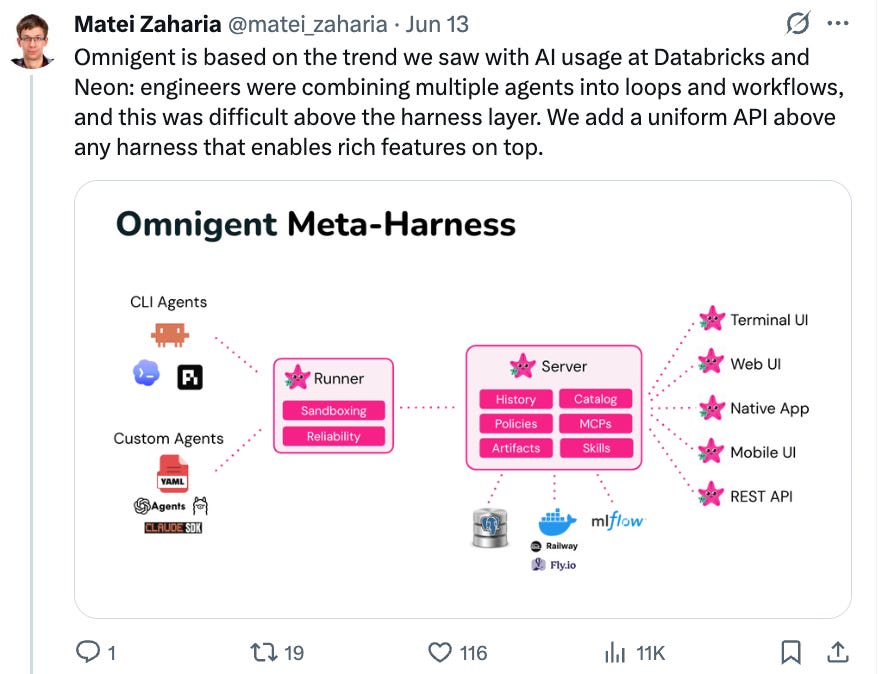
Databricks Open Sources Omnigent ⭐ 7
Databricks has open-sourced Omnigent, a meta-framework for integrating, controlling, and sharing AI Agents. This project aims to provide a standardized API layer to simplify Agent development, collaboration, and deployment, and to encourage community contributions to build an open Agent ecosystem.
Browser Compatibility Database SQLite ⭐ 7
Inspired by the MDN MCP service, the blogger converted MDN’s browser compatibility data into an SQLite database, generated using a Claude Code script. The database is available on GitHub Releases and provided via GitHub CDN, making it convenient for developers to explore in Datasette Lite.
Zig Language Compiler New Features ⭐ 6
The Zig language has updated its bitCast semantics and LLVM backend. The new semantics aim to provide a more consistent bitwise representation but have also sparked discussions about their usability and whether new built-in functions should be introduced. This update is considered helpful for handling bit-packed binary headers.
Industry News
Sam Altman States GPT-5.6 Release is Restricted by Government ⭐ 9
OpenAI CEO Sam Altman revealed that GPT-5.6 will be released in a “limited preview” format, accessible only to a small group of partners, with access requiring government “per-customer approval.” This move is intended for security reasons but could exacerbate the gap between the company’s capabilities and public accessibility.
AI Video Generation is Expensive but in High Demand ⭐ 8.5
Generating one minute of 4K video with the Seedance 2.0 model costs about 700 RMB, but due to its high ROI, it remains in short supply, generating over 30 million RMB in daily revenue for ByteDance. The article points out that AI short dramas have already surpassed live-action short dramas in ROI.

Volcengine Releases Agent Security White Paper ⭐ 8.5
Volcengine has released the “ArkClaw Security White Paper,” which categorizes AI Agent security into three layers and details the six native risks of OpenClaw, such as Gateway/CDP binding and external content manipulation of LLMs, providing security guidance for enterprise-level Agent development.

DeepSeek is Hiring Multimodal Engineers ⭐ 8
DeepSeek is hiring engineers and researchers in the multimodal domain, including data engineers and algorithm researchers (image and video focus).

The Coming Loop: Reflections on LLM Engineering Cycles ⭐ 8
This article delves into the concept of “Loop Engineering” for LLMs, distinguishing between agent loops and harness loops. The author argues that loops amplify systemic flaws in LLM code, making it harder to understand. Loops are primarily suitable for tasks that do not generate new code or require long-term execution. The article notes that even without actively using loops, competition and security demands compel the industry to embrace them. However, the deepest concern lies in cognitive dependence and the relinquishing of judgment. It calls for retaining engineering rules and human oversight while embracing loops.

Hacker News Trends: Indexing 18 Years of Comments ⭐ 7
This project indexes 18 years of Hacker News comments to create a tool similar to Google Trends, allowing users to track the popularity of technical terms over time. Some users have provided open Hacker News datasets, facilitating the development of similar services. Discussions also highlight the differences between this tool and Google Trends, emphasizing its basis in published text rather than user search behavior.
Oxide 3D Rack Tour ⭐ 7
Oxide Computer has released an interactive tour of its 3D rack, showcasing its unique hardware solutions for the cloud computing era. The product is seen as a “breath of fresh air” compared to cloud service providers, with a design that integrates power and networking, and uses modular slots, reminiscent of early Sun Microsystems design principles. The tour also highlights the use of the Illumos operating system and sparks discussions on hardware design, reliability, and firmware architecture.
Generative AI Market Bubble Appears ⭐ 7
The author proposes the concept of a “Generative AI Bubble™,” suggesting that many companies in the current AI industry are overvalued without matching profitability. The market may not “pop” but rather cool down slowly, similar to the end of the Tulip Mania, foreshadowing LLMs potentially heading towards commoditization and price wars.

Databricks Envisions Agent Operating Systems ⭐ 7
Databricks aims to position itself as the operating system for enterprise Agents. Through products like Omnigent and LTAP, it empowers Agents to access the correct context, permissions, and data. The company believes that as model performance converges, enterprise proprietary data and governance will become the core competitive advantage.
Webkit Copy Menu Item Bug ⭐ 6.5
WebKit has a bug on Mac platforms where the Copy menu item remains enabled even when no content is selected. Invoking the shortcut key without selection copies useless information and overwrites the clipboard content. This bug has been closed by the WebKit team but still affects applications using WebKit.
Chinese Open Source Models Accelerate Catch-Up Pace ⭐ 7
Chinese open-source models like GLM-5.2 are performing exceptionally well in programming and Agent tasks, matching or even surpassing some closed-source models while being more cost-effective. This indicates that China is rapidly closing the gap with leading players in the AI field, particularly in open-source models.
Anthropic Joins RAISE US ⭐ 6
Anthropic announced its participation as a founding partner in RAISE US, a non-profit organization dedicated to strengthening the U.S. workforce through employer-led actions, AI-powered training, and policy innovation to support the transition to transformative AI.
Pluralistic: Jailbreaking Is Not Theft ⭐ 6
This article discusses whether “jailbreaking” constitutes intellectual property theft and criticizes attempts to define it as such. The author contrasts this with the early use of “blue boxes” by Apple founders for phone fraud, emphasizing digital sovereignty and users’ control over their own devices.

Social Media Buzz
Stanford CS336 Course Highly Recommended ⭐ 9
There is a strong recommendation for computer science students to complete Stanford’s CS336 “Language Modeling from Scratch” course, suggesting it is more cutting-edge and practical than domestic university courses and can help students master full-stack LLM technologies.
Readwise Automated Learning Flow for Recommended Books ⭐ 7.5
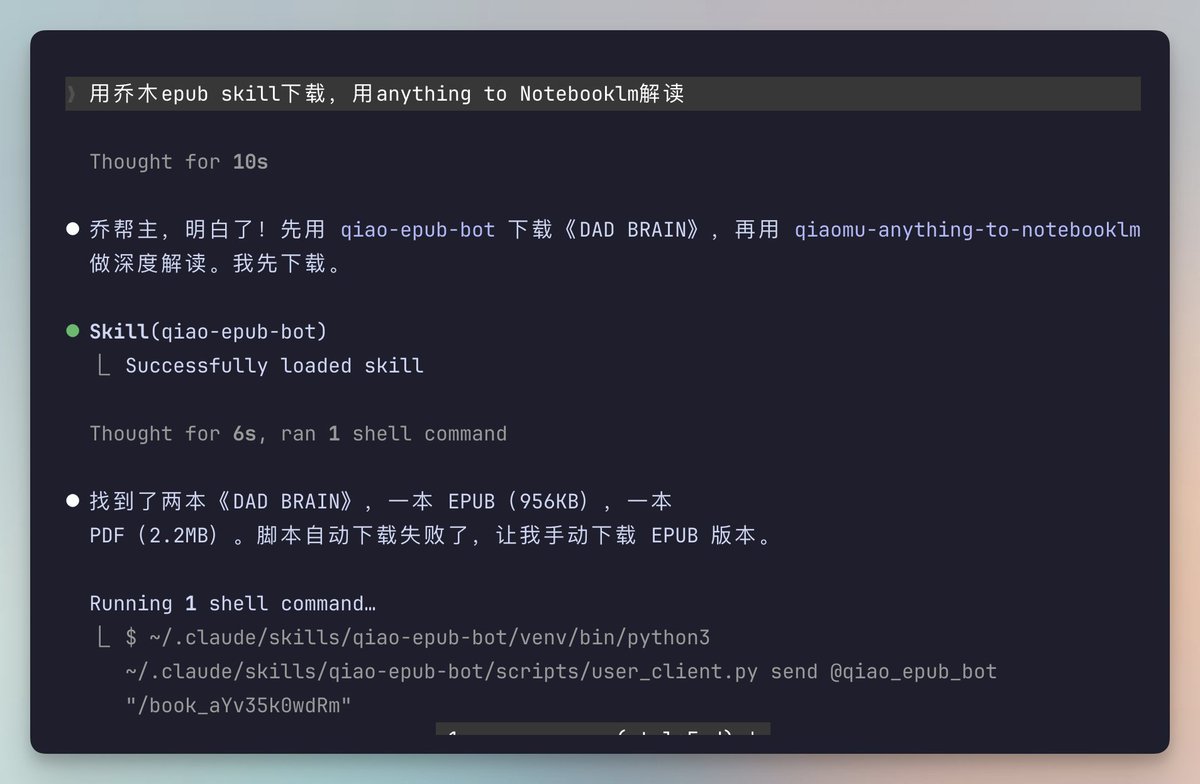
A user shares an automated learning workflow combined with Readwise’s book recommendations: automatically downloading EPUB ebooks via a Telegram bot and Telethon script, then uploading them to NotebookLM for recursive questioning and interpretation to achieve rapid learning. This workflow demonstrates a new approach to enhancing personal knowledge acquisition efficiency using AI tools and automation scripts.
Learning Vercel Product Design Skills ⭐ 7.5
The Vercel team is exploring how to teach product design principles to AI coding agents in practice, aiming to overcome AI’s limitations in understanding the logic behind design decisions. The article details Vercel’s method for building “product-design skills,” including how to encode design decisions, use linters for automated checks, and keep guidelines updated through evidence gathering. Many developers have expressed interest in this approach and consider it an important direction for AI-assisted product development.
Concerns Over Excessive Agent Permissions ⭐ 7
A user warns that granting an Agent maximum permissions on a primary computer, while convenient, carries significant risks. The article shares a case where an AI directly deleted all content on drive D. It is recommended to use sandbox environments or limit Agent permissions to mitigate potential losses.

Doubao 2.1 PRO Programming Capability Tested ⭐ 7
A blogger is testing Doubao 2.1 PRO’s programming capabilities, planning to have it analyze Douyin videos and create a 3D game to test its programming and multimodal abilities. The video demonstrates the detailed testing process, generating anticipation and discussion within the community about the capabilities of domestic large models.

Convenience of AI-Generated Educational Videos ⭐ 7
A blogger shares their experience using AI tools to convert articles into educational videos, with the initial version exceeding expectations. The tool can automatically extract the core content of an article, select an animation style, and is expected to include voiceover functionality, greatly improving the efficiency and convenience of knowledge dissemination.

Discussion on Agent Context Truncation Capability ⭐ 7
A discussion on whether Agents should have the ability to truncate their own context. The blogger envisions Agents proactively correcting misinterpretations or adjusting direction by calling a Context Tool to optimize information processing, offering new ideas for Agent autonomy and efficiency improvement.
Can Unit Tests Test Taste? ⭐ 6
This article explores whether taste can be measured through unit tests, arguing that if taste cannot be conceptualized and externalized, it is difficult to test. The discussion extends to AI capabilities and the limitations of TDD in software development practices, emphasizing the importance of focusing on fundamental algorithms and data structures.