08-03-Daily - AI Hot Daily
AI Hot Daily 2026/8/3
Daily curated AI + indie dev news
Today’s Summary
A hundredfold decrease in AI costs signals a major shift in market dynamics.
AI will surpass human capabilities in mathematical research.
Google hesitated to release its internal AI product for fear of disrupting its core business.
Products in the AI era should not be overly simplistic.
AI drawing ability does not equate to true intelligence.
Multimodality is a capability crucial for making AI more "grounded."
Debate surrounds the advocacy of open models versus their security risks.
Frequent model updates indicate rapid AI development.
Developers trust stable, controllable tools over AI.
Users do not want AI to directly replace human interaction.
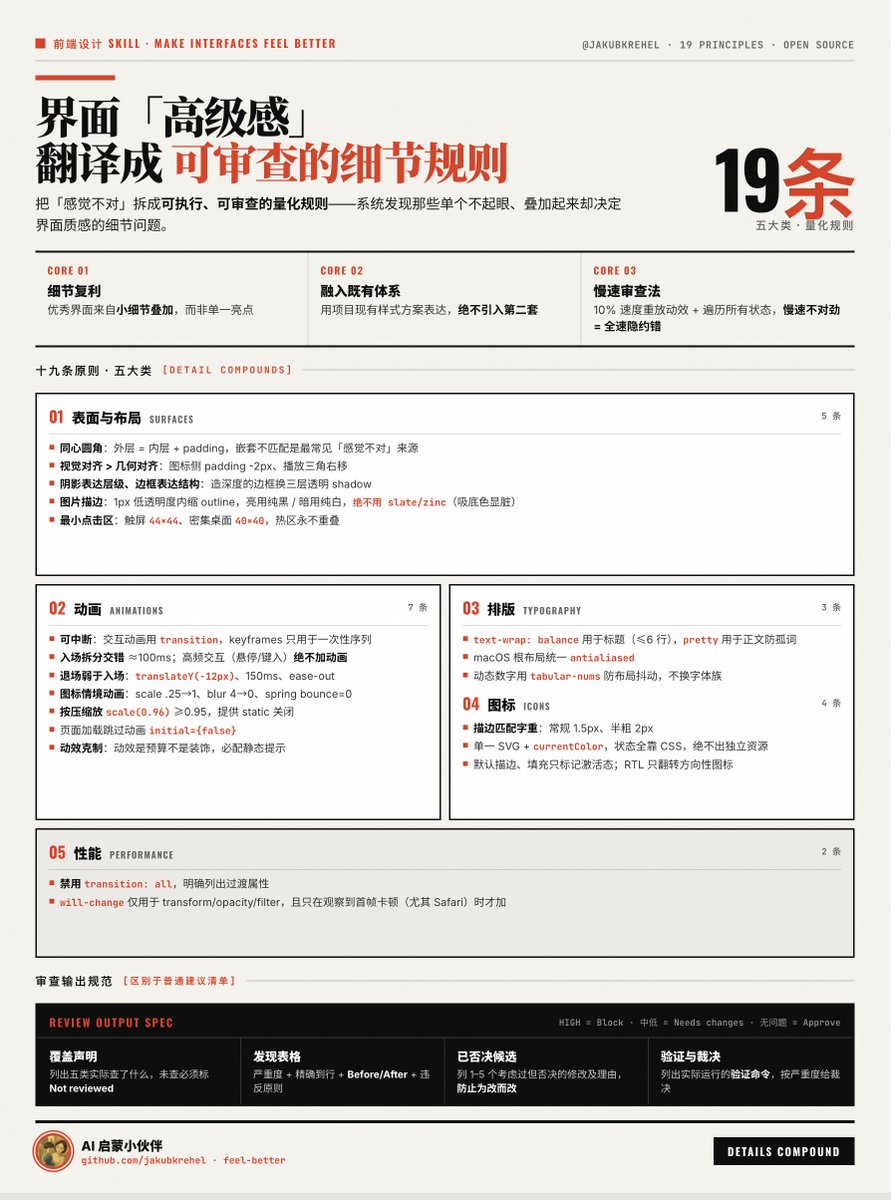
Interface details and rules enhance a sense of sophistication.
AI Technology and Products
CodexLoom: Practicing with AI Agent Teams ⭐ 9
Former Manus bigwig open-sourced CodexLoom, organizing Codex conversations into Agent Teams and providing best practices for Agent Teams. This project aims to solve the bottleneck of “one person cannot simultaneously manage dozens of Agents,” offering independent developers ideas for building more complex AI workflows.

Disruptive AI Innovation: Low-Cost Models ⭐ 9
The article points out that the biggest disruption in AI may not come from smarter models, but from models that are 100 times cheaper. When AI capabilities become commodities, large-scale model companies are not necessarily the winners, providing new market entry points for cost-sensitive independent developers.

Anthropic Opus 5 New Test ⭐ 9
Andrej Karpathy shared his new testing method for Anthropic, giving Opus 5 a budget of approximately 1 million tokens to generate three rendered versions of the “Lord of the Rings” story. This test exposed the limitations of AI in perceiving its own work status when generating long content, providing directions for model development.
AI Agent Cost Considerations ⭐ 9
In Agent applications, focusing solely on token costs is one-sided; the number of task loops, tool calls, etc., significantly impact the total cost. Developers need to consider token consumption, model unit prices, and other factors to select appropriate models and optimize applications.

A New Era of AI-Driven Mathematics ⭐ 9
The article explores breakthroughs in mathematics driven by AI, predicting that AI will surpass humans in mathematical research. Independent developers need to pay attention to the impact of AI on science and engineering, and recognize that understanding the mathematics discovered by AI may no longer be necessary, foreshadowing the direction of future technological development.
Anthropic LLM Rewrites App ⭐ 8
Anthropic’s Boris Cherny attempted to have Claude Code rewrite the Electron version of the Claude App into Swift. The experiment took two weeks and is still ongoing. The article comments that rewriting the appearance does not solve core design issues. For independent developers, the challenge of AI-assisted software development lies in understanding its limitations.
Agent Fone: Customizable AI Phone ⭐ 8
Agent Fone is a revolutionary smartphone that allows users to create custom apps directly on their phones. It offers a new platform for independent developers to easily realize their imaginative app ideas and is currently recruiting early users.
Google’s Hesitation on AI Products ⭐ 8
The article reveals that Google once had an internal product similar to ChatGPT called LMChat but hesitated to release it for fear of disrupting its core business. This illustrates the concerns of large tech companies in innovation and also provides inspiration for new teams to seize opportunities with disruptive products.

Key to Product Design in the AI Era ⭐ 8
YouMind founder Yu Bo pointed out that in the AI era, products that can be explained in one sentence are often difficult to succeed. This suggests that independent developers should focus on the complexity and unique value of AI products when designing them, avoiding oversimplification.
Questioning AI Drawing Tests ⭐ 7.5
The author questions the method of testing AI intelligence solely by drawing SVG images (e.g., “a pelican riding a bicycle”), arguing that it tests drawing ability more than true intelligence. This sparks a discussion on the standards for evaluating AI capabilities.

The True Meaning of Multimodal AI ⭐ 7
The article delves into the practical meaning of “multimodality,” pointing out that it is a capability rather than intelligence, and plays an important role in AI applications. Understanding the necessity of multimodality, especially the importance of visual signals for AI “grounding,” is crucial for developers building more powerful AI.
Release of Multiple Open-Source Large Models ⭐ 7
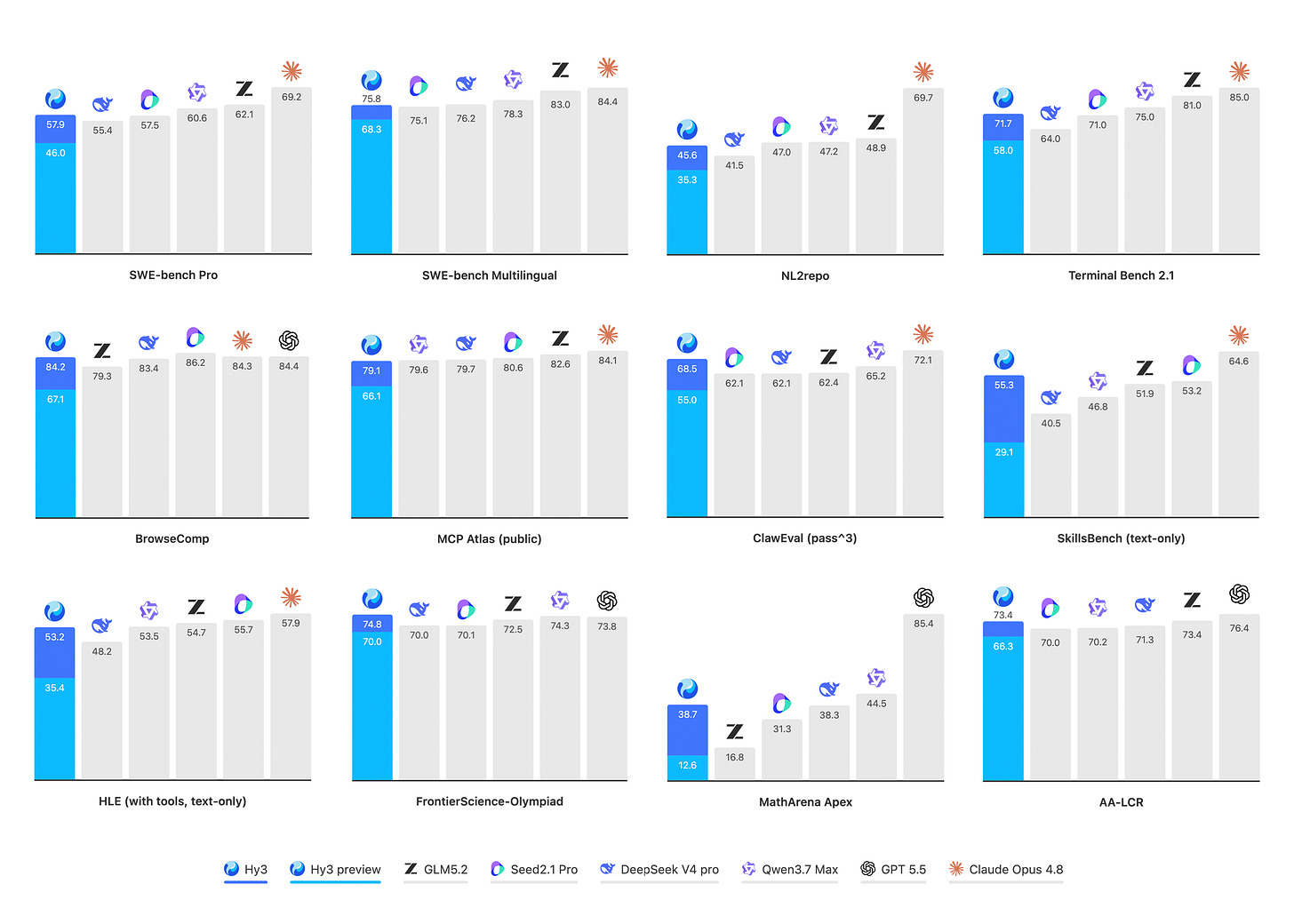
Several recently released open-source models, including Inkling, Hy3, Laguna-S-2.1, DeepSeek-V4-Flash-0731, and Kimi-K3, offer breakthroughs in performance and licensing. Inkling supports multimodal input, Hy3 uses the Apache 2.0 license, Laguna-S-2.1 optimizes MoE models, and DeepSeek-V4-Flash-0731 performs excellently in terms of performance. Although Kimi-K3 is the largest open-source model, it uses a non-commercial license.
AGI Bar Offers Free Local Inference Tokens ⭐ 6
AGI Bar’s new store in Beijing offers unlimited, free local inference token services. Users can connect to the in-store WiFi to use it. Currently, it supports models like DeepSeek V4 Flash and will expand to more models and the Shanghai store in the future. This move aims to lower the barrier to AI usage and allow more people to experience the convenience of local inference.

Open Letters on AI Development ⭐ 7
Multiple parties have issued open letters on AI development. A letter led by Microsoft calls for support for open-weight models, arguing that closed models are not safer and that open models facilitate collaborative community improvements. Anthropic, on the other hand, emphasizes the security risks of open models, such as misuse by authoritarian governments. Another letter calls for international cooperation and cautious advancement of cutting-edge AI technologies to address the competitive pressure from automated AI research.
Copilot Becomes a Verb, TikTok Becomes a Format ⭐ 7
The article compares the phenomenon of “Google” becoming a verb and “TikTok” becoming a format, pointing out that ChatGPT has also become a category, spawning product definitions like “XX version of ChatGPT.” The author further proposes that the emergence of Chinese open-source models has led to the concept of “Temu Model,” describing its characteristics of being low-priced, sufficient, and providing timely help.
Indie Dev & SaaS
Lessons Learned in Domain and Trademark Registration ⭐ 8.5
This startup team was forced to rename their product because they did not register the .ai domain and trademark early enough, leading to a name collision with a competitor. The article emphasizes the importance of early registration of domains and trademarks, which is crucial for independent developers and startups to avoid risks and protect their brands. It may be worth the cost even if it’s expensive.
Meshdiff: Browser-Based STL File Comparison Tool ⭐ 6
Meshdiff is a client-side tool for comparing STL file versions directly in the browser, prioritizing local processing without file uploads. Users have expressed approval of its functionality and suggested adding features like synchronized transformations and locked views. Some developers believe this tool could be integrated into the GitHub PR workflow for 3D file previews.
Open Source Projects
datasette-apps 0.2a0 Released ⭐ 8
Datasette Apps has released version 0.2a0, introducing the app_debug() and app_list() tools to enhance the capabilities of Datasette Agents in creating and editing applications. These new tools allow Agents to test and manage applications in the background, improving development efficiency.
Bor: Open Source Policy Management for Linux Desktops ⭐ 7
Bor is an open-source centralized management system for Linux desktops, consisting of a Go agent and a central server. The new version 0.8 adds support for Thunderbird, Microsoft Edge, and FirewallD. The project aims to provide a more convenient solution for managing Linux workstations.
Industry News
New Perspective on AI Costs: Inexpensive Models ⭐ 9
The biggest disruption in AI may not come from smarter models, but from models that are 100 times cheaper. When AI capabilities become commodities, large-scale model companies are not necessarily the winners, indicating a shift in the competitive landscape of the AI market.
AI-Driven Mathematical Research ⭐ 9
The article explores breakthroughs in mathematics driven by AI, predicting that AI will surpass humans in mathematical research. Independent developers need to pay attention to the impact of AI on science and engineering, and recognize that understanding the mathematics discovered by AI may no longer be necessary, foreshadowing the direction of future technological development.
Google’s Cautious Approach to AI Products ⭐ 8
The article reveals that Google once had an internal product similar to ChatGPT called LMChat but hesitated to release it for fear of disrupting its core business. This illustrates the concerns of large tech companies in innovation and also provides inspiration for new teams to seize opportunities with disruptive products.
Challenges of Product Launches in the AI Era ⭐ 8
YouMind founder Yu Bo pointed out that in the AI era, products that can be explained in one sentence are often difficult to succeed. This suggests that independent developers should focus on the complexity and unique value of AI products when designing them, avoiding oversimplification.
Limitations of AI Drawing Tests ⭐ 7.5
The author questions the method of testing AI intelligence solely by drawing SVG images (e.g., “a pelican riding a bicycle”), arguing that it tests drawing ability more than true intelligence. This sparks a discussion on the standards for evaluating AI capabilities, which is crucial for understanding AI model performance.
Considerations for Multimodal AI Applications ⭐ 7
The article delves into the practical meaning of “multimodality,” pointing out that it is a capability rather than intelligence, and plays an important role in AI applications. Understanding the necessity of multimodality, especially the importance of visual signals for AI “grounding,” is crucial for developers building more powerful AI.
Open Letters on AI Development and Industry Divergence ⭐ 7
A letter led by Microsoft calls for support for open-weight models, emphasizing their transparency and collaborative advantages, aiming to counter potential regulatory restrictions. Anthropic, however, expresses concern, arguing that open models could be misused and calling for limitations on industrial-scale distillation operations. Another letter focuses more on controlling the pace of advancement in cutting-edge AI technologies, reflecting different considerations within the industry regarding the direction of AI development.
Simon Willison’s July Newsletter ⭐ 7
Simon Willison released his July newsletter, covering topics such as unexpected network attacks in OpenAI and Anthropic model tests, updates on models like GPT-5.6, Sol, Terra, Luna, Claude Opus 5, Kimi K3, and DeepSeek-V4-Flash-0731, as well as open letters on AI development and updates on the author’s personal projects.
Social Media Buzz
Trust Issues with AI Agent Tools ⭐ 7
Developers’ attachment to tools stems from the encoding of trust. Compared to constantly changing AI tools, customizable tools like Vim gain developer trust due to their stability and controllability. The article discusses the workflow disruptions and “black box” operation dilemmas brought about by AI Agent tools.
Greg Brockman on AI and Human Relationships ⭐ 7
OpenAI President Greg Brockman pointed out that users do not want ChatGPT colleagues to directly contact them for help, even though they would be happy to receive help from a human colleague. This reflects people’s value for human relationships and their desire for AI to save time or enhance interaction, rather than becoming a barrier between people.
Sharing Frontend Interface Design Details ⭐ 7
The article systematically sorts out quantitative detail rules for enhancing the “sophistication” of an interface, covering layout, animation, typography, icons, and performance. It aims to help developers significantly improve user experience through the accumulation of small details, emphasizing optimization within the existing tech stack rather than introducing new complex systems.